

rsteelesr79
Muscle Memory Explained: How Quickly Can You Regain Lost Muscle?
Muscle Memory Explained: How to Regain Lost Muscle Faster Than You Think
Muscle Memory Definition
Muscle memory is the body’s ability to relearn physical skills or regain previously developed strength and muscle faster than it took to build them initially.
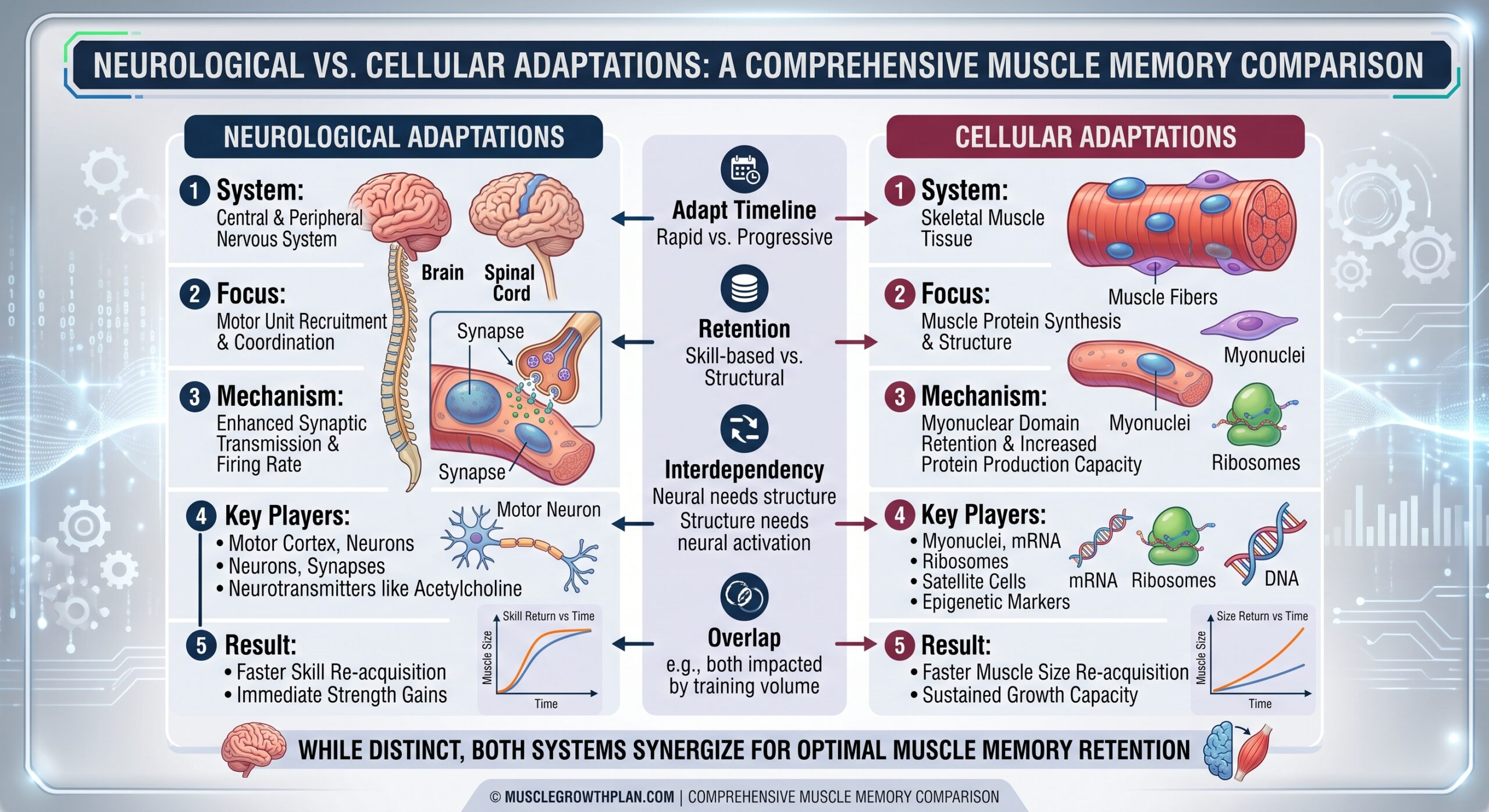
The term describes two related—but different—phenomena:
- Neurological muscle memory: Your nervous system remembers practiced movements and exercise techniques.
- Cellular muscle memory: Previously trained muscle may retain biological adaptations that help it respond more efficiently when training resumes.
This is why someone returning to lifting after several months away may rebuild strength and size faster than a complete beginner starting from the same visible condition.
Simple definition
Muscle memory is the retained effect of previous training that can help you recover lost skill, strength, and muscle more quickly after a break.
Is Muscle Memory Real?
Yes, although the exact biological mechanisms are still being studied.
Research supports the idea that previously trained people can regain performance relatively quickly during retraining. Studies of detraining and retraining have shown that lost strength can return after training resumes, sometimes within a shorter period than the original training phase. One source National Institutes of Health
Researchers are investigating several possible explanations:
- Retained motor skills
- Nervous-system adaptations
- Myonuclei added during earlier growth
- Epigenetic changes inside muscle cells
- Persistent changes in muscle proteins
- Faster relearning of training habits and technique
Recent reviews describe muscle memory as a combination of cellular and epigenetic mechanisms rather than one single process.
The Two Types of Muscle Memory
1. Neurological Muscle Memory
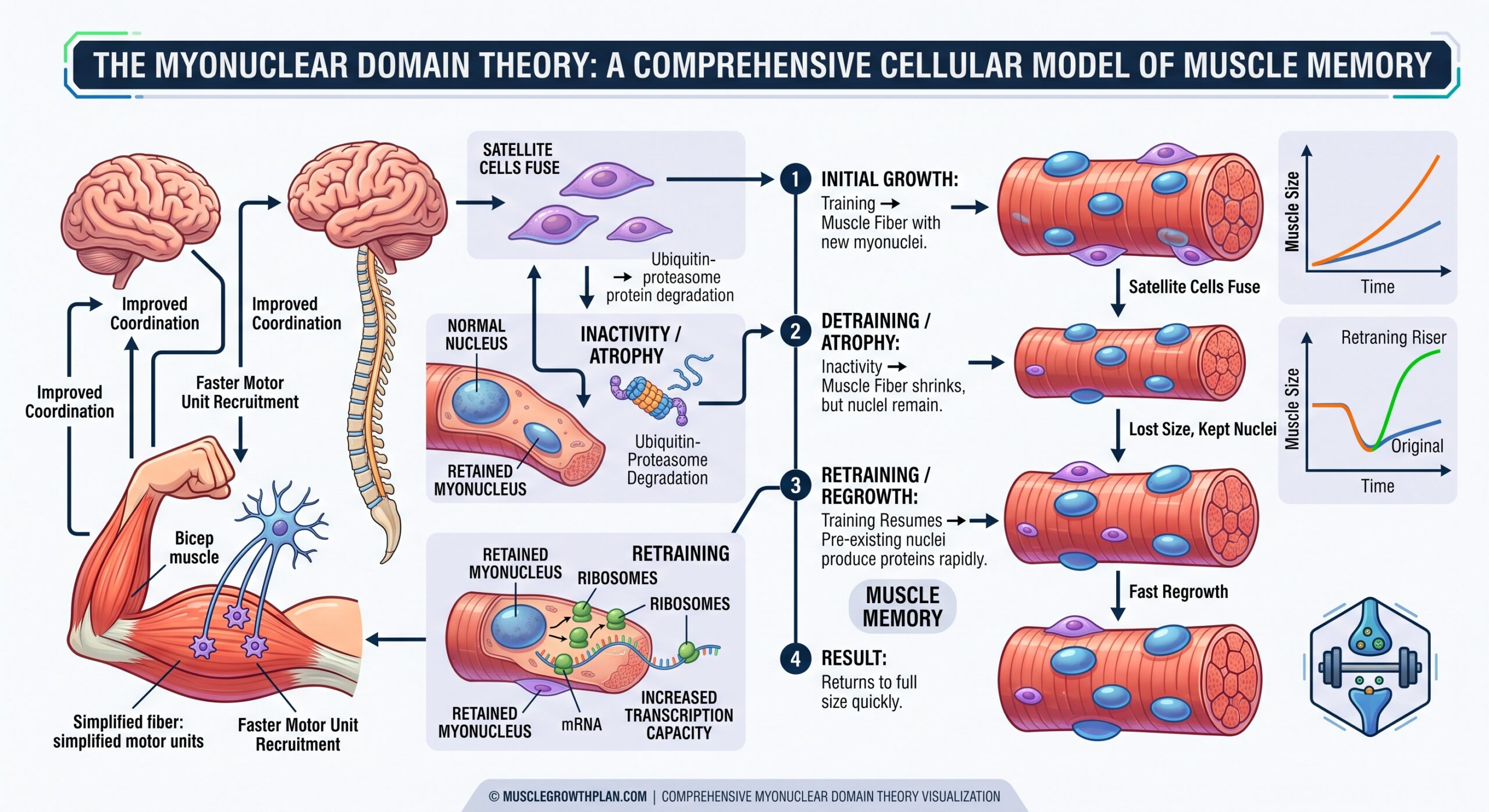
When you repeatedly perform an exercise, your brain and nervous system become more efficient at coordinating it.
You improve:
- Motor-unit recruitment
- Movement timing
- Balance
- Exercise technique
- Coordination between muscles
- Confidence under load
This is why a returning lifter may quickly regain strength even before visibly rebuilding all lost muscle.
Strength is not determined by muscle size alone. It also depends on how effectively your nervous system can recruit and coordinate the available muscle.
One detraining and retraining study in older men found that strength returned to previously trained levels after eight weeks of retraining. The researchers suggested that retained and rapidly reacquired neural adaptations contributed substantially to the return of strength.
2. Cellular Muscle Memory
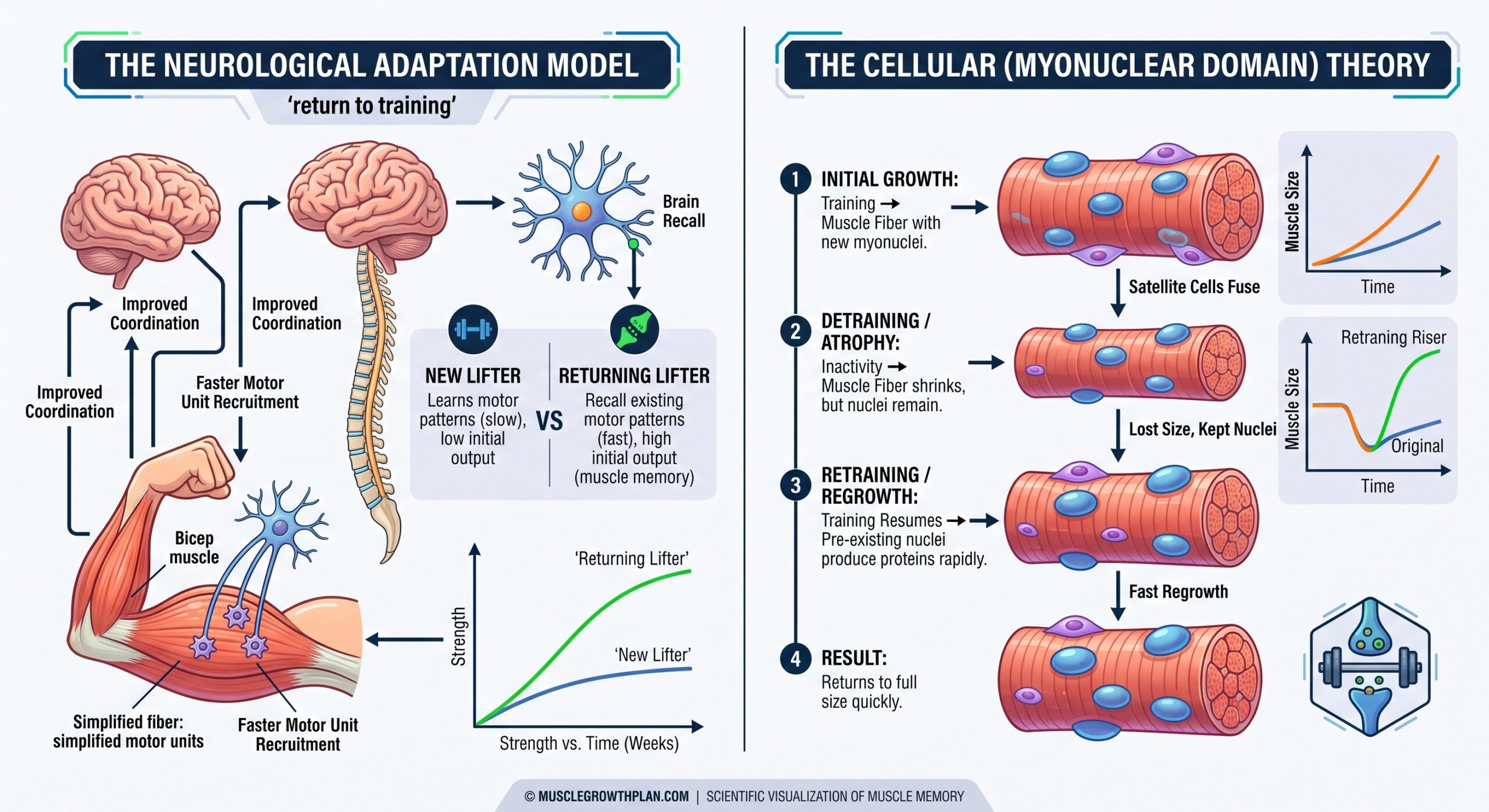
Cellular muscle memory refers to lasting changes within skeletal muscle that may remain after the muscle becomes smaller.
Possible mechanisms include:
- Retained myonuclei
- DNA methylation changes
- Altered gene expression
- Protein-level adaptations
- Changes involving satellite cells
These adaptations may help previously trained muscle respond more rapidly when it is exposed to resistance training again.
What Are Myonuclei?
Skeletal muscle fibers are unusually large cells containing many nuclei, called myonuclei.
These nuclei help manage:
- Protein production
- Muscle repair
- Gene expression
- Fiber maintenance
- Growth-related processes
As muscle fibers grow, satellite cells can fuse with them and contribute additional myonuclei.
A long-standing muscle-memory theory proposes that some of these added myonuclei remain even when the muscle later shrinks. If they remain, they may provide additional capacity for protein production when training begins again.
Animal research has shown that resistance-type overload can add myonuclei before hypertrophy and that some acquired nuclei may remain during later atrophy.
This led researchers to describe myonuclei as a possible cellular basis of muscle memory.
Are Myonuclei Permanent?
This question is still debated.
Some animal studies suggest that myonuclei gained through training can remain after muscle atrophy, potentially helping the muscle regrow faster.
However, a later meta-analysis concluded that myonuclei are not always permanent and may be lost during severe atrophy or aging.
Human evidence is also less clear than animal evidence. A review examining both animal and human research concluded that the myonuclear theory is biologically plausible but remains difficult to confirm conclusively in people.
The most accurate interpretation is:
Retained myonuclei may contribute to muscle memory, but they are probably not the only mechanism—and they may not remain permanently under every condition.
Epigenetic Muscle Memory
Your DNA sequence generally does not change when you train.
However, training can change how certain genes are regulated.
These regulatory changes are known as epigenetic changes.
One commonly studied epigenetic mechanism is DNA methylation, which can affect whether particular genes become more or less active.
Human research has found that skeletal muscle can retain DNA-methylation patterns after an earlier period of hypertrophy. When the muscle was later retrained, researchers observed a larger number of altered methylation sites than during the initial training phase.
This suggests that muscle cells may retain a molecular record of earlier training.
Animal research has similarly found methylation patterns within muscle nuclei that persisted after training and may have supported a stronger response to retraining.
Researchers sometimes describe this as epigenetic memory.
Proteomic Muscle Memory
Proteomics refers to the study of proteins expressed within a cell or tissue.
A 2025 human study found that some resistance-training-related muscle-protein changes remained after more than two months of detraining. The researchers described this as possible evidence of a retained proteomic memory. Source The Journal of Physiology
This is a developing research area.
It suggests that muscle memory may involve not just:
- Nuclei
- DNA regulation
- Neural pathways
but also lasting changes in the proteins produced by previously trained muscle.
Why Does Lost Strength Return So Quickly?
Strength can return faster than muscle size for several reasons.
Exercise technique returns
You have already learned how to:
- Brace
- Control the weight
- Follow the correct bar path
- Coordinate the movement
- Produce force efficiently
Neural recruitment improves rapidly
The nervous system becomes better at activating the muscle fibers needed for the lift.
Confidence returns
Previously trained people are often less hesitant under heavier loads.
Some muscle may not have been lost
A person can look smaller because of lower glycogen, water, or muscle fullness without having lost all the underlying muscle tissue.
Cellular adaptations may remain
Myonuclear, epigenetic, and protein-related adaptations may help muscle respond more efficiently during retraining.
How Fast Do You Lose Muscle?
Muscle loss does not begin immediately after missing a few workouts.
Short breaks may produce:
- Reduced muscle fullness
- Lower glycogen
- Less water stored inside the muscle
- Slightly worse coordination
- Temporary performance changes
These effects can make you look and feel smaller even when little actual muscle tissue has been lost.
One study found that resistance-trained men maintained their strength gains after two weeks without training.
Longer periods of inactivity can eventually reduce:
- Muscle size
- Strength
- Work capacity
- Exercise tolerance
The rate of loss depends on:
- How long you stop training
- Your training experience
- Age
- Protein and calorie intake
- Illness or injury
- Daily activity
- The severity of immobilization
How Long Does It Take to Regain Lost Muscle?
There is no universal timeline.
However, previously trained people often regain lost strength and muscle faster than it originally took to develop them.
The timeline depends on:
- How much muscle was lost
- How long you were inactive
- Your previous training level
- Age
- Current health
- Nutrition
- Sleep
- How gradually you restart training
A practical, non-guaranteed timeline may look like this:
First two weeks
- Technique improves
- Coordination returns
- Muscles regain glycogen and fullness
- Early strength improvements appear
Weeks three to six
- Working weights begin rising
- Training tolerance improves
- Visible muscle fullness may return
- Soreness becomes more manageable
Weeks six to twelve
- Meaningful strength and muscle can return
- Progress may feel faster than during your original beginner phase
In one older-adult study, eight weeks of retraining restored maximal strength to previously trained levels after detraining.
Another study found that retraining restored muscular performance after a period without structured resistance exercise in older women.
These findings do not guarantee that everyone will regain all lost muscle in eight weeks. They simply demonstrate that retraining can produce substantial recovery.
Does Muscle Memory Last Forever?
Researchers do not know exactly how long every component of muscle memory lasts.
Different forms may persist for different periods.
Motor skills
Well-practiced movement patterns can remain for years, although technique may initially feel rusty.
Myonuclei
Some may remain during periods of atrophy, but evidence suggests they are not necessarily permanent under every circumstance.
Epigenetic changes
Some training-related DNA-methylation patterns may persist after detraining, but researchers are still determining how long they last and how strongly they affect future growth.
Protein adaptations
Some protein-level changes may remain for months, although this field is still developing.
It is safest to say that prior training can leave meaningful biological and neurological traces, but muscle memory should not be viewed as an unlimited lifetime guarantee.
Does Muscle Memory Work After Years Away?
It can.
Someone returning after several years may still have advantages over a complete beginner, including:
- Previous technique
- Exercise familiarity
- Better awareness of effort
- Knowledge of programming
- Established training habits
- Possible retained cellular adaptations
However, after a very long break, aging, injury, illness, and lifestyle changes may slow the return.
A person who trained seriously at 25 and returns at 50 should not immediately resume the exact weights or volume used decades earlier.
The prior experience is valuable, but the restart should still be gradual.
Muscle Memory After Injury
Muscle memory may help during recovery from an injury, but rehabilitation must respect the injured tissue.
You should not assume that because your muscles “remember,” your:
- Tendons
- Ligaments
- Bones
- Joints
- Surgical repairs
are ready for your previous workload.
Muscular strength can return faster than connective tissues adapt.
This creates a risk of doing too much too soon.
When returning after injury:
- Follow medical or rehabilitation guidance
- Restore pain-free range of motion
- Start with conservative loads
- Increase volume gradually
- Monitor swelling and pain
- Avoid testing maximum strength too early
Muscle Memory After Weight Loss
People sometimes lose muscle during aggressive dieting.
If you previously carried more muscle, retraining combined with adequate protein may help you rebuild it.
However, the scale may not change much because:
- Fat may decrease
- Muscle may increase
- Glycogen and water may fluctuate
Use several progress measures:
- Strength
- Circumference measurements
- Progress photos
- Body-weight trends
- Clothing fit
Muscle Memory and Aging
Older adults can retain and regain substantial strength through resistance training.
Research has shown that even very old adults can improve strength and muscle size when they participate in structured resistance training.
This is important because older adults frequently experience interruptions caused by:
- Illness
- Surgery
- Travel
- Joint pain
- Caregiving responsibilities
- Hospitalization
Muscle memory may make previous resistance-training experience especially valuable later in life.
Even when some gains are lost, earlier training was not wasted.
Does Muscle Memory Apply to Cardio and Sports Skills?
Yes, in a broader neurological sense.
The nervous system can retain learned movement patterns from:
- Cycling
- Swimming
- Running
- Throwing
- Martial arts
- Dance
- Olympic lifting
- Team sports
This is why a person returning to cycling may quickly regain balance and technique even though cardiovascular fitness has declined.
However, skill memory does not mean physical conditioning remains unchanged.
You may remember how to perform the activity while lacking your former:
- Endurance
- Strength
- Speed
- Mobility
- Recovery capacity
How to Regain Lost Muscle Safely
1. Do not start where you stopped
Begin with approximately 50%–70% of your former training volume or load, depending on the length and cause of the break.
2. Leave repetitions in reserve
Finish most early sets with three to five good repetitions still possible.
3. Limit soreness
Extreme soreness does not rebuild muscle faster.
Use fewer sets during the first two weeks.
4. Train each muscle consistently
Two weekly sessions per muscle group can work well when volume is moderate.
5. Add load gradually
Increase weight or repetitions only when technique and recovery are good.
6. Eat enough protein
A practical daily range for many lifters is approximately:
1.6–2.2 grams of protein per kilogram of body weight
7. Consume sufficient calories
If rebuilding muscle is the priority, avoid an unnecessarily aggressive calorie deficit.
8. Sleep consistently
Aim for seven to nine hours per night.
9. Track performance
Record weights, repetitions, soreness, and recovery.
Four-Week Muscle-Memory Restart Plan
Week 1: Reintroduce movement
- Two or three full-body sessions
- One or two sets per exercise
- Light-to-moderate weights
- Stop far from failure
Week 2: Add a little volume
- Two or three sets per exercise
- Keep loads manageable
- Practice full range of motion
Week 3: Begin progressive overload
- Add repetitions
- Increase weight slightly where appropriate
- Move closer to normal effort
Week 4: Resume structured training
- Follow a full program
- Keep one to three repetitions in reserve
- Adjust volume according to recovery
Do not rush simply because your strength returns quickly.
Your coordination may improve before your joints and connective tissues are ready for maximum loading.
Can Supplements Speed Up Muscle Memory?
No supplement creates muscle memory.
However, some products may support the retraining process.
Protein powder
Useful when you struggle to reach your daily protein target.
Creatine monohydrate
Can support high-intensity training performance and strength progression.
Electrolytes
Potentially helpful during long, hot, or high-sweat workouts.
Supplements cannot replace:
- Consistent training
- Adequate calories
- Protein
- Sleep
- Gradual load progression
Common Muscle-Memory Myths
Myth 1: You never truly lose muscle
False.
Muscle size and strength can decline during prolonged inactivity.
Muscle memory means recovery may be faster—not that loss never occurs.
Myth 2: Myonuclei remain forever
Not necessarily.
Some research supports retention, while other evidence indicates myonuclei can be lost during atrophy and aging.
Myth 3: You can return at full strength immediately
False.
Coordination may return quickly, but connective tissue and work capacity still require gradual adaptation.
Myth 4: Muscle memory guarantees identical results
False.
Age, health, injury, nutrition, and the length of the break can affect retraining.
Myth 5: Muscle memory only exists in the brain
False.
Neurological memory is important, but research also supports possible cellular, epigenetic, and protein-related memory inside skeletal muscle.
Actionable Protocol: The 4-Week “Return to Lifting” Ramp-Up
The 4-Week Progression Template
| Week | Focus | Intensity (% 1RM) | Target Proximity to Failure (RIR) | Set Volume |
| Week 1 | Re-Activation & Technique | 50% – 55% | 3 – 4 RIR (Very Easy) | 2 sets / exercise |
| Week 2 | Neural Re-Coordination | 60% – 65% | 2 – 3 RIR (Moderate) | 2–3 sets / exercise |
| Week 3 | Hypertrophic Adaptation | 70% – 75% | 1 – 2 RIR (Challenging) | 3 sets / exercise |
| Week 4 | Full Progression Baseline | 75% – 80%+ | 1 RIR / Near Failure | 3–4 sets / exercise |
What is RIR? Reps in Reserve (RIR) indicates how many more clean repetitions you could have performed before hitting technical failure. A 3 RIR means stopping a set with 3 solid reps left in the tank.
Week-by-Week Breakdown
Week 1: Movement Re-Acquisition
-
Primary Objective: Wake up motor pathways, restore joint mobility, and avoid crippling soreness.
-
Volume: 2 working sets per movement pattern (Squat, Hinge, Push, Pull).
-
Execution: Focus entirely on controlled tempos (2-second eccentrics) and strict technique. The weights should feel light and easy.
Week 2: Work Capacity Build
-
Primary Objective: Re-establish training stamina and muscle glycogen storage.
-
Volume: Increase to 2–3 working sets per exercise.
-
Execution: Add a small load increase (5–10 lbs on compounds) while leaving 2–3 reps in reserve.
Week 3: Mechanical Tension Re-Introduction
-
Primary Objective: Stimulate cellular protein synthesis and tap into retained myonuclei.
-
Volume: 3 working sets per exercise.
-
Execution: Increase loads to standard working weights (70–75% 1RM). Muscle fullness and pump will noticeably return during this week.
Week 4: Full Training Integration
-
Primary Objective: Establish your new progressive overload baseline.
-
Volume: Normal training volume (3–4 sets).
-
Execution: Train at full intensity (1 RIR) and begin logging your weekly micro-progressions (adding weight or repetitions) just like a standard training block.
Retraining Best Practices
-
Prioritize Protein Intake: Keep daily protein at 0.8–1.0g per pound of body weight to support rapid structural repair.
-
Stay Hydrated & Replenish Electrolytes: Intracellular glycogen and water return rapidly during retraining; adequate sodium and water intake reduces cramping and pumps muscles faster.
-
Resist the Ego-Lift: Your brain will tell you that you can handle heavier weight before your tendons and ligaments adapt. Stick strictly to the prescribed RIR for the first two weeks.
Frequently Asked Questions
What is muscle memory?
Muscle memory is the retained effect of earlier training that helps you relearn movements and potentially regain lost strength and muscle faster after a break.
Is muscle memory scientifically proven?
The rapid return of strength and performance during retraining is well documented. The exact cellular mechanisms—particularly the permanence of myonuclei—remain under investigation.
How quickly can lost muscle return?
Some people regain noticeable strength and size within several weeks, while larger losses may require several months. The timeline depends on the length of the break, prior training, age, nutrition, and health.
Does muscle return faster than it was originally built?
Often, yes. Relearned technique, neural adaptations, and retained cellular changes may accelerate the retraining response.
Do you lose muscle after two weeks off?
Usually very little actual muscle is lost in only two weeks. You may notice reduced fullness or performance, but one study found that trained men maintained strength after a two-week break.
Can older adults benefit from muscle memory?
Yes. Studies show that older adults can regain strength after detraining and improve muscle through resistance exercise.
Does muscle memory work after an injury?
Previous training may help, but injury recovery must be guided by tissue healing and medical advice. Do not resume former loads immediately.
Frequently Asked Questions About Muscle Memory
How long does muscle memory last?
Neurological adaptations (movement coordination and motor unit recruitment) can persist for months to years, while cellular adaptations—such as added myonuclei and epigenetic DNA-methylation markers—can last anywhere from several years to potentially decades, depending on age, health, and initial training history.
How quickly can you regain lost muscle?
Most returning lifters regain a significant portion of their lost muscle size and strength within 4 to 12 weeks of structured retraining. Because your nervous system and muscle fibers do not need to build new neuromuscular pathways or cellular machinery from scratch, progress is typically twice as fast as initial beginner gains.
Does muscle memory work after a 5 or 10-year break?
Yes. While severe age-related atrophy or extended periods of total inactivity can reduce some cellular adaptations, previously trained individuals still retain baseline neural motor patterns and epigenetic advantages. Even after a decade away, returning lifters rebuild muscle faster than someone who has never touched a barbell.
Do you need to eat in a calorie surplus to regain lost muscle?
Not necessarily. Due to the rapid efficiency of muscle memory, returning lifters can often achieve body recomposition (building muscle while losing fat) by eating at maintenance calories or a slight caloric deficit, provided protein intake remains high (roughly 0.8–1.0g per pound of body weight).
Why do muscles look smaller after just 1 to 2 weeks off?
Short-term size reduction is almost entirely due to depleted muscle glycogen and intracellular water, not actual contractile muscle fiber loss (atrophy). True tissue loss typically doesn’t begin until 2 to 3 consecutive weeks of complete inactivity.
Key Takeaways
Muscle memory is more than a gym myth.
It includes:
- Retained movement skills
- Neural coordination
- Possible retention of myonuclei
- Epigenetic changes
- Persistent protein adaptations
- Faster relearning of training habits
The evidence is strongest for the practical result:
Previously trained people can often regain lost strength and muscle faster than complete beginners build them.
However, the exact cellular explanation is still being refined.
To make the most of muscle memory:
- Restart conservatively.
- Use progressive resistance training.
- Eat enough protein and calories.
- Sleep and recover properly.
- Allow connective tissues time to adapt.
- Measure progress over several weeks.
A training break does not erase everything you built.
You may lose some size, strength, and conditioning—but your previous effort can leave behind skills and adaptations that make the comeback much faster than the original climb.
Continue Learning
Explore these related guides:
- Why You Keep Losing Muscle
- How to Break Through a Muscle-Building Plateau
- Progressive Overload Explained
- Satellite Cells Explained
- Muscle Protein Synthesis Explained
- Hypertrophy Explained
- How Much Protein Do You Need to Build Muscle?
- How Much Sleep Do You Need to Build Muscle?
- Muscle Growth Glossary
Download our FREE 12-Week Muscle Regain Plan for gradual workouts, progressive overload targets, protein guidance, and recovery strategies.
Question: How long were you away from training, and how quickly did your strength return when you started again? Share your experience in the comments.**
Medical Disclaimer
This article provides general educational information and is not medical or rehabilitation advice. Consult a qualified healthcare professional before returning to exercise after surgery, serious illness, prolonged inactivity, or injury.
How to Build Muscle for Women Without Bulking Up
Women’s Complete Guide to Building Muscle Without Bulking Up
Many women want to become stronger, firmer, and more athletic—but hesitate to lift heavier weights because of one fear:
“What if I get too bulky?”
That concern keeps many women stuck performing endless cardio, lifting weights that are too light, or avoiding effective strength exercises altogether.
The reality is very different.
Women can build meaningful muscle and strength through resistance training, but substantial muscular development takes time, progressive training, adequate nutrition, and consistent effort. It does not happen accidentally after a few weeks of lifting.
Research shows that resistance training produces large improvements in strength and measurable muscle growth in healthy women. Women also appear to achieve hypertrophy responses broadly comparable to men when improvements are considered relative to their starting size.
In this guide, you will learn:
- Why lifting weights does not automatically make women bulky
- How often women should strength train
- The best exercises for building lean muscle
- How much protein and food you need
- Whether you should bulk, cut, or recomp
- A complete three-day beginner workout
- How long it takes to see results
Can Women Build Muscle?
Absolutely.
Women’s muscles respond to progressive resistance training in the same fundamental way as men’s muscles:
- Training places tension on the muscle.
- The body repairs and adapts to that challenge.
- The muscle gradually becomes stronger and potentially larger.
- Continued progress requires increasingly challenging training.
Women can develop:
- Stronger legs and glutes
- More defined shoulders and arms
- Improved posture
- Better bone health
- Greater physical confidence
- A firmer, more athletic appearance
Resistance-training research in women consistently shows improvements in both strength and hypertrophy. Training volume appears to be one of the important factors influencing how much adaptation occurs.
Will Lifting Weights Make Women Bulky?
For most women, not unless they deliberately train and eat for substantial muscle gain over an extended period.
Becoming visibly “bulky” generally requires:
- Years of progressive resistance training
- Relatively high training volume
- Adequate calories and protein
- Favorable genetics
- A deliberate focus on maximizing muscular size
Women typically have much lower circulating testosterone concentrations than men. Although testosterone is not the only factor controlling muscle development, this hormonal difference makes rapid, extreme muscular growth less likely.
A few months of strength training will not suddenly create a bodybuilding physique.
More commonly, women notice:
- A tighter-looking waist as body composition improves
- Rounder glutes
- Better shoulder and arm definition
- Firmer legs
- Improved posture
- Clothes fitting differently
- Greater strength without dramatic scale changes
Muscle does not automatically make your body look larger. Because muscle is relatively dense, gaining some muscle while losing fat can produce a smaller, firmer appearance even when body weight changes very little.
“Toned” Muscle vs. Bulky Muscle
The fitness industry often uses the word toned, but there is no separate type of toned muscle.
The toned appearance comes from two things:
- Having enough muscle to create shape
- Having low enough body fat for that shape to be visible
You cannot tone a muscle without developing it.
Very light weights performed for endless repetitions do not create a special “long and lean” muscle. Your muscle shape is influenced largely by anatomy and genetics.
To create visible definition, women generally need:
- Progressive resistance training
- Appropriate calorie intake
- Sufficient protein
- Gradual fat loss when needed
- Patience
The goal is not to avoid muscle growth. It is to build an amount of muscle that matches your preferred appearance.
How Women Build Muscle
The main principles are straightforward:
- Train muscles against resistance
- Make workouts progressively harder
- Complete enough weekly training
- Eat sufficient protein
- Consume enough calories to recover
- Sleep consistently
- Repeat the process for months and years
You do not need a women-only method of muscle growth.
Women may prefer different goals or exercise selections, but the physiology of progressive resistance training remains the foundation.
1. Use Progressive Overload
Progressive overload means gradually increasing the challenge placed on your muscles.
This can involve:
- Adding weight
- Performing more repetitions
- Adding a productive set
- Improving your range of motion
- Using better technique
- Controlling the lowering phase
- Progressing to a harder exercise variation
For example:
Week 1
Goblet squat: 25 pounds for 10 repetitions
Week 4
Goblet squat: 25 pounds for 15 repetitions
Week 6
Goblet squat: 30 pounds for 10 repetitions
That is progress.
Recent research in young untrained women found greater muscle growth when resistance exercise was progressively overloaded, although beginners may still gain some muscle before regular load increases become necessary.
Keep a workout log so that every session has a clear purpose.
Related guide: [Progressive Overload Explained]
2. Lift Challenging Weights
Women are often told to use extremely light weights to avoid becoming bulky.
That advice can limit progress.
Muscle can grow across a wide range of resistance levels when sets are sufficiently challenging. Heavier loads tend to be more useful for maximizing strength, while lighter and moderate loads can also produce hypertrophy when performed with enough effort.
A practical approach is:
Compound exercises
Use roughly 6–12 repetitions.
Isolation exercises
Use roughly 10–20 repetitions.
The exact number is less important than finishing most sets with approximately one to three controlled repetitions still possible.
The weight should feel challenging near the end of the set without causing your form to collapse.
3. Focus on Effective Exercises
A good muscle-building program trains all major muscle groups.
Lower-body exercises
- Squats
- Leg presses
- Romanian deadlifts
- Hip thrusts
- Bulgarian split squats
- Lunges
- Leg curls
- Calf raises
Upper-body pushing exercises
- Dumbbell bench presses
- Push-ups
- Machine chest presses
- Overhead presses
- Lateral raises
- Triceps pushdowns
Upper-body pulling exercises
- Lat pulldowns
- Assisted pull-ups
- Cable rows
- Dumbbell rows
- Rear-delt flyes
- Biceps curls
You do not need to avoid upper-body training because you fear looking broad.
Balanced shoulder, back, and arm development can improve posture and create the appearance of a more defined waist.
4. Train Each Muscle More Than Once Per Week
Many women follow routines built around one leg day, one arm day, and several cardio sessions.
A more effective beginner structure is often:
- Three full-body workouts per week
- Four upper/lower workouts per week
- Three to five total resistance-training sessions, depending on experience
Training frequency mostly helps distribute your weekly work. When weekly volume is comparable, frequency alone is not magic, but dividing your sets across multiple sessions can improve performance and recovery.
For beginners, three full-body sessions provide an excellent balance between stimulation and recovery.
Complete Three-Day Muscle-Building Workout for Women
Train on nonconsecutive days, such as Monday, Wednesday, and Friday.
Before each workout:
- Warm up for five to ten minutes
- Perform lighter practice sets before heavy exercises
- Use controlled, pain-free movement
- Stop if an exercise causes sharp pain
Day 1
Goblet Squat
3 sets of 8–12 repetitions
Dumbbell Bench Press
3 sets of 8–12 repetitions
Lat Pulldown
3 sets of 8–12 repetitions
Romanian Deadlift
3 sets of 8–12 repetitions
Dumbbell Lateral Raise
2 sets of 12–20 repetitions
Plank
3 sets of 30–60 seconds
Day 2
Hip Thrust
3 sets of 8–12 repetitions
Dumbbell Shoulder Press
3 sets of 8–12 repetitions
Seated Cable Row
3 sets of 8–12 repetitions
Bulgarian Split Squat
3 sets of 8–12 repetitions per leg
Leg Curl
2 sets of 10–15 repetitions
Cable Crunch
3 sets of 10–15 repetitions
Day 3
Leg Press
3 sets of 10–15 repetitions
Incline Dumbbell Press
3 sets of 8–12 repetitions
Assisted Pull-Up or Lat Pulldown
3 sets of 8–12 repetitions
Walking Lunge
3 sets of 10 repetitions per leg
Rear-Delt Fly
2 sets of 12–20 repetitions
Biceps Curl
2 sets of 10–15 repetitions
Triceps Pushdown
2 sets of 10–15 repetitions
How to Progress the Workout
Use a method called double progression.
Suppose an exercise calls for 8–12 repetitions:
- Choose a weight you can lift for about eight controlled repetitions.
- Keep using that weight until you reach 12 repetitions on every set.
- Increase the weight by the smallest available amount.
- Return to approximately eight repetitions.
- Repeat the process.
You will not improve every exercise every week.
Look for progress over several weeks rather than expecting constant daily increases.
How Many Sets Do Women Need?
There is no perfect number for every woman.
A reasonable beginner target is approximately:
- 8–12 challenging weekly sets for larger muscle groups
- 4–8 direct weekly sets for smaller muscles
- Less volume during your first weeks while learning technique
More experienced women may benefit from additional volume, particularly when training quality and recovery remain strong. Research in healthy women and postmenopausal women suggests that higher training volumes can sometimes produce greater improvements in lean mass and hypertrophy, but more is not always better.
Add sets only when:
- You recover before your next workout
- Strength is stable or increasing
- Soreness is manageable
- Your technique remains good
- Your schedule allows consistency
How Much Protein Do Women Need to Build Muscle?
A practical daily protein target for women who resistance train is:
1.6–2.2 grams of protein per kilogram of body weight per day
For a woman weighing 150 pounds, or approximately 68 kilograms, that equals roughly:
109–150 grams of protein per day
A major meta-analysis found that protein supplementation improved muscle size and strength gains during resistance training, with benefits tending to level off around a total intake of approximately 1.6 grams per kilogram per day for many adults.
Protein intake should be viewed as a daily target, not a post-workout emergency.
Distribute it across three to five meals.
High-protein foods
- Greek yogurt
- Cottage cheese
- Eggs
- Chicken
- Turkey
- Fish
- Lean beef
- Milk
- Whey protein
- Soy protein
- Tofu
- Tempeh
- Beans and lentils
Protein powder is optional. It is useful only when it makes reaching your daily target easier.
Do Women Need to Eat More to Build Muscle?
Muscle growth requires energy, but that does not mean every woman needs to begin a traditional bulk.
The right calorie target depends on your starting point.
Use a modest calorie surplus when:
- You are relatively lean
- Maximum muscle gain is your main priority
- Your weight and strength have been stalled
- You are comfortable gaining a small amount of fat
A surplus of approximately 150–250 calories per day is a reasonable starting point.
Eat near maintenance when:
- You are a beginner
- You want slow muscle gain with minimal weight change
- You are returning after time away from training
Use a modest deficit when:
- You carry excess body fat
- Fat loss is currently the main priority
- You continue lifting and eating sufficient protein
Women who are new to strength training may be able to build muscle while losing fat, particularly when their previous protein intake and training were inadequate.
This is known as body recomposition.
Related guide: [Body Recomposition Diet]
Sample Muscle-Building Meal Plan for Women
Portion sizes should be adjusted to your calorie needs.
Breakfast
- Eggs or Greek yogurt
- Oatmeal
- Berries
Lunch
- Chicken, tofu, or salmon
- Rice or potatoes
- Vegetables
Pre-workout snack
- Banana
- Greek yogurt or a protein shake
Dinner
- Lean beef, turkey, fish, or tempeh
- Pasta, rice, or potatoes
- Salad or cooked vegetables
Evening snack
- Cottage cheese
- Fruit
- Nuts if additional calories are needed
A good diet should also include sufficient:
- Carbohydrates for training
- Healthy fats
- Fruits and vegetables
- Fluids
- Fiber and micronutrients
Should Women Avoid Carbohydrates?
No.
Carbohydrates fuel resistance training and help replenish muscle glycogen.
Avoiding carbohydrates can make workouts feel harder, particularly during:
- High-volume lower-body training
- Multiple weekly sessions
- Combined strength and cardio programs
- Calorie-restricted diets
Useful carbohydrate sources include:
- Rice
- Potatoes
- Oats
- Fruit
- Pasta
- Whole-grain bread
- Beans
- Quinoa
Carbohydrates do not automatically create fat gain.
Long-term calorie balance determines whether body weight increases or decreases.
Does the Menstrual Cycle Affect Strength Training?
Some women notice changes in:
- Energy
- Appetite
- Motivation
- Fluid retention
- Exercise comfort
- Perceived strength
across the menstrual cycle.
However, individual responses vary greatly.
There is no universal cycle-based workout plan that every woman must follow.
A practical approach is to:
- Track your symptoms
- Adjust effort when necessary
- Avoid interpreting temporary water retention as fat gain
- Continue training when you feel capable
- Reduce volume or intensity during unusually difficult days
Persistent pain, severe fatigue, irregular cycles, or loss of menstruation should be discussed with a qualified healthcare professional.
Building Muscle During Perimenopause and Menopause
Women can continue building strength and muscle during and after menopause.
Resistance training is particularly valuable during this period because aging and menopause can be associated with changes in muscle mass, bone density, and body composition.
Research supports resistance training as an effective way for postmenopausal and older women to improve strength, functional capacity, and muscle-related outcomes.
Older women may benefit from:
- Regular resistance training
- Sufficient protein
- Gradual load progression
- More recovery between demanding sessions
- Medical guidance for osteoporosis or joint conditions
Protein timing does not need to be perfect. One randomized trial in postmenopausal women found that immediate versus delayed post-workout protein timing did not meaningfully change long-term lean-mass or strength gains when resistance training was performed.
Is Cardio Bad for Women Trying to Build Muscle?
No.
Cardio supports:
- Heart health
- Work capacity
- Stress management
- General fitness
- Calorie expenditure
The problem occurs when cardio volume becomes so high that it interferes with recovery, appetite, or strength training.
A balanced plan might include:
- Three or four resistance-training sessions
- Two or three moderate cardio sessions
- Daily walking
- At least one lower-stress recovery day
Place your highest priority on strength training when muscle growth is the goal.
Best Supplements for Women Building Muscle
Most supplements are optional.
Creatine monohydrate
Creatine can improve high-intensity exercise performance and support gains in strength and lean mass when combined with resistance training.
A standard approach is:
3–5 grams per day
Women do not need a special “female” creatine formula.
Protein powder
Whey, soy, or another complete protein powder can help meet daily protein needs.
Caffeine
Caffeine may improve focus and performance, but it can also interfere with sleep.
Vitamin and mineral supplements
Use these to address genuine dietary gaps or documented deficiencies—not as muscle-building shortcuts.
Avoid products marketed as:
- Female toning pills
- Hormone-balancing fat burners
- Anabolic supplements for women
- Detox teas
- Waist-trimming products
These products rarely address the fundamentals that actually change body composition.
How Long Does It Take Women to Build Muscle?
Results depend on:
- Training experience
- Genetics
- Starting body composition
- Protein and calorie intake
- Program quality
- Sleep
- Consistency
A realistic timeline may look like this:
Weeks 1–4
- Better exercise technique
- Improved coordination
- Early strength gains
Weeks 5–12
- Noticeable increases in strength
- Firmer muscles
- Better posture
- Subtle visual changes
Months 3–6
- More visible shape in the legs, glutes, shoulders, and arms
- Clothes fitting differently
- Meaningful performance improvements
Six to twelve months
- Significant body-composition changes when training and nutrition remain consistent
Women should judge progress through:
- Strength records
- Measurements
- Progress photos
- Clothing fit
- Energy and confidence
- Body-weight trends
The scale alone cannot distinguish muscle gain from fat loss or temporary water retention.
Common Muscle-Building Mistakes Women Make
Mistake 1: Using weights that are too light
The final repetitions should be challenging.
Mistake 2: Training only the lower body
Balanced upper-body training improves strength, posture, and overall shape.
Mistake 3: Changing workouts constantly
Repeat key exercises long enough to measure progression.
Mistake 4: Eating too little
Chronic under-eating makes recovery and muscle growth more difficult.
Mistake 5: Avoiding protein
Protein supports muscle repair and helps preserve lean mass during fat loss.
Mistake 6: Performing excessive cardio
Cardio is useful, but it should not replace resistance training.
Mistake 7: Expecting immediate visual results
Muscle development occurs over months, not days.
Mistake 8: Comparing yourself with fitness influencers
Lighting, posing, genetics, editing, performance-enhancing drugs, and years of training can all affect online physiques.
Frequently Asked Questions
How can women build muscle without getting bulky?
Use progressive resistance training, eat enough protein, and keep calories near maintenance or in a small surplus. Significant bulk requires substantial time and deliberate effort.
How many days per week should women lift weights?
Three full-body sessions or four upper/lower sessions work well for many women. The best schedule is one you can perform consistently and recover from.
Should women lift heavy weights?
Women should use weights that are challenging for the chosen repetition range. Heavy and lighter loads can both build muscle, while heavier training is generally more useful for maximizing strength.
How much protein should a woman eat to build muscle?
Approximately 1.6–2.2 grams per kilogram of body weight per day is a practical muscle-building range for many active women.
Can women gain muscle while losing weight?
Yes, particularly beginners and women with higher body-fat levels. Resistance training, adequate protein, and a moderate calorie deficit are essential.
Do women need different muscle-building supplements than men?
Usually not. Creatine and complete protein work through the same basic physiological mechanisms. Doses may differ according to body size and individual needs—not marketing labels.
Will building muscle make the scale increase?
Possibly. You may gain muscle while losing fat, causing body weight to remain stable. Use measurements, photos, strength, and clothing fit alongside the scale.
Final Thoughts
Women do not need to avoid challenging weights to prevent becoming bulky.
Building muscle is one of the most effective ways to become:
- Stronger
- Firmer
- More athletic
- More resilient
- More confident
- Better prepared for healthy aging
The process is simple, although it requires patience:
- Train all major muscle groups.
- Use progressive overload.
- Make your working sets challenging.
- Eat sufficient protein.
- Choose calories according to your body-composition goal.
- Sleep and recover consistently.
- Track strength and measurements—not only body weight.
You will not accidentally wake up with excessive muscle.
You will gradually build the physique created by your training, nutrition, and long-term choices.
Ready to Start Building Muscle?
Download our FREE 12-Week Muscle Growth Plan for Women and receive:
- Three- and four-day workout options
- Glute, leg, shoulder, back, and arm training
- Progressive overload targets
- Protein and calorie guidance
- Body-composition tracking tools
- Recovery recommendations
Start with manageable weights, focus on steady progress, and give your body enough time to change.
Question: What is your main goal—building glutes, getting stronger, improving definition, or changing your overall body composition? Share your answer in the comments.**
Medical Disclaimer
This article provides general educational information and is not medical advice. Consult a qualified healthcare professional before beginning a new training or nutrition program, particularly if you are pregnant, postpartum, managing osteoporosis, experiencing irregular menstruation, or living with an injury or medical condition.
What to Eat After a Workout to Build Muscle and Recover Faster
Post-Workout Nutrition: What to Eat After the Gym to Build Muscle
You finish your final set.
Your muscles are tired, your shirt is soaked, and you know you trained hard.
Then the questions begin:
Do I need a protein shake immediately?
Should I eat carbohydrates?
How long is the anabolic window?
What happens if I cannot eat for another two hours?
Post-workout nutrition is often made much more complicated than it needs to be.
You do not need a secret meal, an enormous shake, or a perfectly timed supplement stack. What you need is enough protein, carbohydrates, fluids, and total daily calories to support recovery and adaptation.
Resistance exercise stimulates muscle-protein synthesis, and consuming protein during the recovery period increases that response. Over time, the repeated combination of resistance training and adequate protein supports gains in muscle size and strength.
In this guide, you will learn:
- What to eat after lifting weights
- How much protein you need
- When carbohydrates matter most
- How quickly you need to eat
- Whether a shake is enough
- The best post-workout meals for different goals
Why Post-Workout Nutrition Matters
A productive workout creates a stimulus for adaptation.
During the hours after training, your body begins repairing and remodeling the exercised muscles. Protein ingestion supports this process by supplying amino acids and further stimulating muscle-protein synthesis.
Post-workout nutrition can also help:
- Replenish muscle glycogen
- Restore fluids lost through sweat
- Support the next training session
- Reduce the chance of under-eating later
- Help you reach your daily protein and calorie targets
The meal after your workout is important, but it is not more important than your entire diet.
One perfect post-workout meal cannot compensate for consistently inadequate calories, protein, sleep, or training.
The Two Main Post-Workout Nutrients
For most lifters, the most useful post-workout combination is:
- Protein
- Carbohydrates
Fat can also be included. It does not need to be eliminated unless a very high-fat meal causes digestive discomfort or displaces the protein and carbohydrates you need.
1. Protein After a Workout
Protein provides the amino acids your body uses to repair and build muscle proteins.
Research supports consuming high-quality protein after resistance exercise to increase muscle-protein synthesis and support long-term training adaptations.
How much protein should you eat?
A practical post-workout target for many adults is:
20–40 grams of high-quality protein
The ideal amount depends on:
- Body size
- Age
- Training volume
- The amount of muscle trained
- Protein quality
- Your total daily intake
Research reviews indicate that approximately 20 grams of rapidly digested high-quality protein can maximize the early muscle-protein-synthesis response after some workouts, while larger people, older adults, or sessions involving more total muscle may benefit from an amount closer to 30–40 grams.
Best post-workout protein sources
- Chicken breast
- Turkey
- Lean beef
- Fish
- Eggs
- Greek yogurt
- Cottage cheese
- Milk
- Whey protein
- Soy protein
- Tofu
- Tempeh
Choose a source that fits your preferences, digestion, budget, and schedule.
Is a Protein Shake Necessary?
No.
A protein shake is convenient, but it is not required.
Whole foods and protein powder can both support muscle growth when they help you meet your protein needs.
A shake may be useful when:
- You are traveling
- You train before work
- You have little appetite after exercise
- You cannot eat a meal for several hours
- You struggle to reach your daily protein target
A complete meal may be preferable when you are hungry and have time to eat because it can also provide carbohydrates, vitamins, minerals, and greater fullness.
Good shake options
Simple shake
- Whey or plant protein
- Water or milk
- Banana
Higher-calorie muscle-building shake
- Protein powder
- Milk
- Banana
- Oats
- Peanut butter
The second option is more appropriate for someone trying to gain weight than someone pursuing a calorie deficit.
2. Carbohydrates After a Workout
Carbohydrates help replenish muscle glycogen used during training.
They become especially important when:
- You trained for a long time
- The workout involved high volume
- You performed endurance work
- You train twice in one day
- Your next session is within several hours
- You are an athlete with a demanding competition schedule
The International Society of Sports Nutrition notes that carbohydrate timing is most important when rapid glycogen restoration is needed. Combining carbohydrates and protein can support recovery after intense exercise.
For a typical recreational lifter who will not train again until the next day, there is less urgency. Eating enough carbohydrates across the remainder of the day is usually sufficient.
Good post-workout carbohydrates
- Rice
- Potatoes
- Sweet potatoes
- Oats
- Pasta
- Bread
- Fruit
- Cereal
- Quinoa
- Beans
- Chocolate milk
How Many Carbohydrates Do You Need?
There is no universal post-workout carbohydrate number for every lifter.
Your needs depend on:
- Training duration
- Training intensity
- Body size
- Total daily calories
- Whether you are bulking, maintaining, or cutting
- How soon you need to perform again
For ordinary resistance training, a balanced meal containing a moderate serving of carbohydrates is often enough.
Examples include:
- One to two cups of cooked rice
- A medium or large potato
- Oatmeal with fruit
- Pasta with lean protein
- A sandwich with fruit
Athletes requiring rapid recovery between closely spaced sessions may use more specific body-weight-based targets under the guidance of a sports dietitian.
What About Fat After a Workout?
Dietary fat does not need to be avoided after training.
Foods such as:
- Avocado
- Olive oil
- Nuts
- Seeds
- Whole eggs
- Salmon
- Peanut butter
can be part of a nutritious post-workout meal.
A very high-fat meal may slow digestion, but slower digestion does not automatically prevent recovery or muscle growth.
The bigger priorities are:
- Enough protein
- Enough total energy
- Adequate carbohydrates for your activity
- A meal you digest comfortably
How Soon Should You Eat After a Workout?
The traditional bodybuilding claim says that you must consume protein within 30 minutes or lose your gains.
That is an exaggeration.
Resistance exercise increases muscle sensitivity to protein for many hours. Research indicates that the combined effect of exercise and protein is not limited to a tiny 30-minute window.
A practical approach
Eat a protein-rich meal within roughly two hours after training when convenient.
However, your urgency depends partly on when you last ate.
If you ate protein one to three hours before training
You do not need to rush.
A normal meal after you shower, travel home, or finish errands is usually fine.
If you trained fasted
Eating protein and carbohydrates reasonably soon after training becomes more useful because you have not consumed amino acids or energy for several hours.
If you cannot eat for several hours
A protein shake, milk, yogurt, or portable snack can bridge the gap.
The goal is consistency—not panic.
The Anabolic Window Explained
The anabolic window refers to the period after exercise when muscles are especially responsive to nutrients.
The window exists, but it is broader than the narrow window often described in supplement advertising.
Resistance exercise elevates muscle-protein synthesis beyond the immediate workout period. Early studies found that synthesis remained elevated for many hours and could still be substantially increased around 24 hours after heavy resistance training.
This does not mean meal timing is irrelevant.
It means that total daily protein, meal distribution, and consistent intake matter more than consuming a shake the second your workout ends.
Best Post-Workout Meals
Meal 1: Chicken and rice
- Grilled chicken
- White or brown rice
- Vegetables
- Olive oil or avocado
This provides protein, carbohydrates, micronutrients, and adjustable calories.
Meal 2: Salmon and potatoes
- Salmon
- Roasted potatoes
- Green vegetables
A useful option for protein, carbohydrates, and healthy fats.
Meal 3: Lean beef and pasta
- Lean ground beef
- Pasta
- Tomato sauce
- Mixed vegetables
This works well after a demanding workout or during a muscle-building phase.
Meal 4: Eggs and oatmeal
- Whole eggs or eggs with egg whites
- Oatmeal
- Fruit
A convenient post-workout breakfast.
Meal 5: Greek yogurt bowl
- Greek yogurt
- Granola or oats
- Berries
- Honey
Useful when you want something quick and light.
Meal 6: Turkey sandwich and fruit
- Turkey
- Whole-grain bread
- Cheese if desired
- Fruit
Easy to pack for work or travel.
Meal 7: Plant-based recovery bowl
- Tofu or tempeh
- Rice or quinoa
- Beans
- Vegetables
- Sauce or avocado
A complete plant-focused meal with protein, carbohydrates, and fiber.
Post-Workout Nutrition for Different Goals
Building muscle
Focus on:
- 20–40 grams of protein
- A substantial carbohydrate serving
- Enough daily calories
- A modest calorie surplus when appropriate
Example:
Chicken, rice, vegetables, and olive oil.
Losing fat
You still need protein after training.
Keep the meal filling while controlling total calories.
Example:
Lean chicken, potatoes, and a large serving of vegetables.
Avoid treating the workout as permission for an unlimited cheat meal.
Body recomposition
Prioritize:
- High protein
- Moderate carbohydrates
- Nutrient-dense foods
- Calories near maintenance or in a small deficit, depending on your starting point
Example:
Salmon, rice, and vegetables.
Hardgainers
Use calorie-dense additions:
- Milk
- Oats
- Nut butter
- Olive oil
- Larger rice or pasta servings
- Smoothies
Example:
A whey, milk, oat, banana, and peanut-butter shake followed by a normal meal later.
What to Eat After a Late-Night Workout
Training late does not mean you should skip food.
Eating carbohydrates at night does not automatically cause fat gain. Total calorie balance matters more.
Choose a meal that is satisfying but comfortable enough for sleep.
Examples:
- Greek yogurt with oats and berries
- Cottage cheese with fruit
- Eggs and toast
- Chicken and rice
- Protein shake with a banana
If large meals disrupt your sleep, use a lighter option and make sure your earlier meals provide enough total nutrition.
Hydration After Training
Recovery also requires fluids.
After training:
- Drink water according to thirst
- Replace fluids lost through sweat
- Include sodium and electrolytes when sweating heavily
- Monitor urine color as a rough hydration indicator
Athletes who lose substantial body weight through sweat may require a more structured rehydration strategy.
For ordinary gym sessions, water and a normal meal are often sufficient.
Supplements After a Workout
Whey protein
Convenient and rapidly digested, but not required.
Creatine monohydrate
Creatine supports high-intensity performance and long-term training adaptations when taken consistently.
It does not have to be consumed immediately after the workout. Daily consistency matters more than exact timing.
BCAAs
BCAAs are generally unnecessary when you consume enough complete protein.
A protein source containing all essential amino acids provides a more complete muscle-building option.
Electrolytes
Useful after long, hot, or high-sweat training sessions.
Mass gainer
Potentially useful for hardgainers, but many products are expensive sources of protein and carbohydrates that can be recreated with ordinary foods.
Common Post-Workout Nutrition Mistakes
Mistake 1: Waiting all day to eat
You do not need to eat immediately, but repeatedly going many hours without food after training can make it harder to reach your calorie and protein goals.
Mistake 2: Consuming protein without enough daily calories
Protein alone cannot compensate for chronic under-eating when your goal is maximum muscle gain.
Mistake 3: Avoiding all carbohydrates
Carbohydrates support glycogen restoration and future training performance.
Mistake 4: Turning every workout into a cheat meal
A demanding workout does not erase the calorie content of pizza, desserts, and sugary drinks.
Mistake 5: Relying only on supplements
A shake is useful, but your overall diet should still contain nutrient-dense meals.
Mistake 6: Obsessing over the 30-minute window
Consistent daily nutrition is more important than racing to drink a shake in the locker room.
Frequently Asked Questions
What is the best food to eat after a workout?
A balanced meal containing high-quality protein and carbohydrates is ideal. Examples include chicken and rice, eggs and oatmeal, salmon and potatoes, or Greek yogurt with fruit.
How much protein should I eat after lifting?
Approximately 20–40 grams is a practical range for many adults. Larger individuals, older adults, and people completing full-body workouts may benefit from the higher end.
Do I need carbohydrates after a workout?
Carbohydrates are helpful for replenishing glycogen, particularly after long or high-volume sessions or when another workout is scheduled soon. They are not mandatory immediately after every ordinary lifting session.
Is a protein shake enough?
It can be enough as a temporary recovery option, but a balanced meal generally provides more nutrients and may be more filling.
Can I eat fat after a workout?
Yes. Moderate dietary fat does not prevent muscle growth or recovery.
What happens if I do not eat immediately?
Probably nothing significant, especially if you ate a protein-containing meal before training. Try to eat a balanced meal within the next few hours.
Should I eat after a workout if I am trying to lose weight?
Yes. Protein-rich post-workout meals can support muscle retention and help control hunger. Your total daily calorie intake remains the deciding factor for fat loss.
Key Takeaways
Your post-workout meal does not need to be complicated.
Focus on these priorities:
- Consume approximately 20–40 grams of quality protein.
- Include carbohydrates based on your training and calorie needs.
- Rehydrate after sweating.
- Eat within a few hours rather than obsessing over 30 minutes.
- Prioritize total daily calories and protein.
- Use shakes for convenience—not because whole food is inferior.
- Adjust the meal to your goal: muscle gain, fat loss, or recomposition.
Training creates the stimulus.
Post-workout nutrition supplies the materials and energy your body needs to recover from that training.
The best recovery meal is not the one with the fanciest supplement stack.
It is the meal you can digest, enjoy, and consistently fit into a complete muscle-building diet.
Continue Learning
Read these next:
- What to Eat Before a Workout
- How Much Protein Do You Need to Build Muscle?
- Best Foods for Muscle Growth
- Muscle Building Meal Plan for Beginners
- Body Recomposition Diet
- BCAAs Explained
- Muscle Protein Synthesis Explained
- Glycogen Explained
- How Much Sleep Do You Need to Build Muscle?
Download our FREE 12-Week Muscle Growth Plan for complete workouts, meal plans, recovery guidance, and evidence-based supplement recommendations.
Question: What is your favorite post-workout meal—whole food, a shake, or a combination of both? Share it in the comments.**
Medical Disclaimer
This article provides general educational information and is not personalized medical or nutrition advice. People with diabetes, kidney disease, digestive disorders, food allergies, or other medical conditions should consult a qualified healthcare professional or registered dietitian.
What to Eat Before a Workout for Muscle Growth and Better Performance
What to Eat Before a Workout for Maximum Muscle and Performance
What to Eat Before a Workout for Maximum Muscle and Performance
Have you ever walked into the gym feeling completely drained?
Your muscles feel weak.
Your energy disappears halfway through your workout.
The weights feel heavier than they should.
Many people assume they need a stronger pre-workout supplement.
In reality, the biggest problem is often much simpler:
They didn’t properly fuel their workout.
What you eat before training can have a major impact on your energy levels, workout performance, and long-term muscle-building progress.
While no single meal will instantly add muscle, consistently eating the right nutrients before training helps you lift heavier, complete more quality training volume, and recover more effectively.
In this guide, you’ll learn:
- The best foods to eat before a workout
- How long before training you should eat
- The ideal balance of protein, carbohydrates, and fats
- Whether fasted workouts build muscle
- Common pre-workout nutrition mistakes
- Sample meals for every schedule
Why Pre-Workout Nutrition Matters
Resistance training places significant demands on your muscles.
To perform at your best, your body needs:
- Available energy
- Amino acids to support muscle repair
- Adequate hydration
- Muscle glycogen for high-intensity exercise
Proper pre-workout nutrition can help:
- Improve workout performance
- Support muscle protein synthesis
- Delay fatigue
- Increase training volume
- Improve recovery
- Maintain consistent energy throughout your workout
The better you perform in the gym, the better your opportunity for long-term muscle growth.
The Three Nutrients That Matter Most
1. Carbohydrates
Carbohydrates are your body’s preferred fuel source during moderate-to-high intensity resistance training.
They help replenish muscle glycogen, which supports strength and performance.
Excellent pre-workout carbohydrates include:
- Oatmeal
- White rice
- Brown rice
- Sweet potatoes
- Potatoes
- Bananas
- Apples
- Berries
- Whole-grain bread
- Rice cakes
If you’re training for more than an hour or performing high-volume sessions, carbohydrates become even more important.
2. Protein
Protein provides the amino acids needed for muscle repair and growth.
Eating protein before training helps ensure amino acids are available during the recovery period after exercise.
Aim for approximately:
20–40 grams of high-quality protein
before your workout.
Excellent choices include:
- Chicken breast
- Turkey
- Lean beef
- Eggs
- Greek yogurt
- Cottage cheese
- Whey protein
- Tofu
- Tempeh
3. Healthy Fats
Healthy fats support overall nutrition but digest more slowly.
Large amounts immediately before training may leave some people feeling sluggish.
Good fat sources include:
- Avocados
- Almonds
- Walnuts
- Peanut butter
- Olive oil
If you’re eating within an hour of training, keep fat intake relatively moderate.
When Should You Eat Before a Workout?
2–3 Hours Before
This is often the ideal window for a full meal.
Example:
- Grilled chicken
- Rice
- Vegetables
- Fruit
This gives your body time to digest while providing sustained energy.
60–90 Minutes Before
A smaller meal works well.
Example:
- Greek yogurt
- Banana
- Granola
or
- Turkey sandwich
- Fruit
30–60 Minutes Before
Choose foods that digest quickly.
Examples:
- Banana
- Whey protein shake
- Rice cakes with honey
- Applesauce
- Low-fat yogurt
Avoid very large meals this close to training.
Best Pre-Workout Meals
Meal 1
Chicken breast
White rice
Broccoli
Meal 2
Greek yogurt
Banana
Granola
Meal 3
Turkey sandwich
Apple
Meal 4
Protein shake
Oats
Blueberries
Meal 5
Eggs
Whole-grain toast
Fruit
Best Pre-Workout Snacks
If you’re short on time:
- Banana
- Rice cakes
- Protein shake
- Apple
- Greek yogurt
- Pretzels
- Low-fat chocolate milk
- Oatmeal
- Cottage cheese
These provide quick energy without leaving you overly full.
Hydration Matters Too
Even mild dehydration can reduce exercise performance.
Aim to:
- Drink water throughout the day.
- Have about 500–600 mL (17–20 oz) of water 2–3 hours before training.
- Sip water during longer workouts, especially in hot conditions.
If your workouts last longer than an hour or involve heavy sweating, electrolyte-containing beverages may also be helpful.
Should You Work Out Fasted?
Fasted workouts are popular for fat loss.
But if your goal is building muscle, they’re not usually necessary.
Research suggests that when total daily calories and protein are adequate, fasted and fed training can both be effective.
However, many people perform better when they’ve eaten beforehand.
If you enjoy fasted training and still meet your nutrition goals, you can still build muscle.
If you notice reduced strength or energy, try eating a light meal before training.
Is Coffee a Good Pre-Workout?
Yes.
Caffeine is one of the most well-researched performance supplements.
For many people, it can:
- Increase alertness
- Improve focus
- Reduce perceived effort
- Improve strength and power performance
Coffee is an inexpensive alternative to many commercial pre-workout products.
Avoid consuming caffeine too late in the day if it interferes with sleep.
Should You Take a Pre-Workout Supplement?
A pre-workout supplement is optional.
The most important factors remain:
- Consistent training
- Adequate calories
- Sufficient protein
- Good sleep
Some evidence-based ingredients include:
- Caffeine
- Creatine monohydrate (taken daily, not necessarily before training)
- Citrulline malate (may support training performance for some people)
Be cautious of proprietary blends with undisclosed ingredient amounts.
Foods to Avoid Right Before Training
Some foods can cause discomfort when eaten immediately before exercise.
These include:
- Large fast-food meals
- Fried foods
- Heavy cream sauces
- Large amounts of cheese
- Very spicy foods
- Excess alcohol
- Large desserts
High-fiber foods are healthy overall but may cause digestive discomfort for some people if eaten immediately before intense exercise.
Sample Pre-Workout Meal Plans
Morning Workout
30–60 Minutes Before
- Banana
- Whey protein shake
After Workout
- Eggs
- Oatmeal
- Berries
Afternoon Workout
Lunch
- Chicken
- Rice
- Vegetables
Snack
- Greek yogurt
- Banana
Evening Workout
Dinner (2–3 Hours Before)
- Lean beef
- Potatoes
- Green vegetables
Snack (30 Minutes Before)
- Rice cakes
- Honey
Common Pre-Workout Nutrition Mistakes
Skipping Protein
Protein supports muscle repair and recovery.
Not Eating Enough Carbohydrates
Low glycogen can reduce workout intensity.
Eating Too Much Right Before Training
A huge meal may leave you feeling sluggish.
Trying New Foods on Heavy Training Days
Stick with foods you know your stomach tolerates well.
Relying Only on Supplements
Supplements cannot replace a balanced diet.
Frequently Asked Questions
Should I Eat Before Every Workout?
If possible, yes.
Most people perform better after consuming some combination of protein and carbohydrates.
Is a Banana Good Before a Workout?
Yes.
Bananas provide easily digested carbohydrates and potassium, making them a convenient pre-workout snack.
Can I Lift Weights on an Empty Stomach?
Yes, but it may not be ideal for everyone.
Some people experience lower energy and reduced performance when training fasted.
How Much Protein Should I Eat Before a Workout?
Approximately 20–40 grams of high-quality protein is a practical target for many people.
Should I Drink a Protein Shake Before Training?
Yes.
A whey protein shake can be an excellent option, especially if you’re short on time.
Key Takeaways
The best pre-workout meal doesn’t need to be complicated.
Focus on the basics:
- Eat quality carbohydrates for energy.
- Include 20–40 grams of protein.
- Keep fats moderate close to training.
- Stay hydrated.
- Time your meal according to your schedule.
- Prioritize consistent daily nutrition over perfect timing.
Remember:
A great workout starts long before you pick up your first weight.
Fuel your body properly, train with intensity, and you’ll give yourself the best chance to build muscle over the long term.
Continue Your Muscle-Building Journey
Read these next:
- What to Eat After a Workout
- Best Foods for Muscle Growth
- Body Recomposition Diet
- Muscle Building Meal Plan for Beginners
- How Much Protein Do You Need to Build Muscle?
- Best Pre-Workout Supplements
- Creatine Explained
- Muscle Growth Glossary
Want to take the guesswork out of nutrition?
Download our FREE 12-Week Muscle Growth Plan and receive:
✔ Complete meal plans
✔ Grocery shopping lists
✔ Pre- and post-workout nutrition guides
✔ Progressive workout programs
✔ Evidence-based supplement recommendations
Fuel smarter, train harder, and maximize every workout.
Question: What’s your favorite pre-workout meal that gives you the best energy in the gym? Share your go-to meal in the comments below.
Medical Disclaimer
This article is for educational purposes only and is not intended as personalized medical or nutritional advice. If you have diabetes, gastrointestinal disorders, food allergies, or other medical conditions, consult a qualified healthcare professional or registered dietitian before making significant dietary changes.
What Are BCAAs? Benefits for Muscle Growth and Recovery
What Are BCAAs? Benefits, Muscle Growth and Whether You Need a Supplement
BCAA Definition
BCAAs, or branched-chain amino acids, are three essential amino acids:
- Leucine
- Isoleucine
- Valine
They are called “branched-chain” amino acids because of their molecular structure.
BCAAs are classified as essential amino acids, meaning your body cannot produce them in sufficient amounts. You must obtain them from food or supplements.
They are abundant in protein-rich foods such as:
- Meat
- Fish
- Eggs
- Milk
- Greek yogurt
- Whey protein
- Soy foods
- Beans and lentils
BCAAs are involved in muscle-protein metabolism, exercise energy production and cellular signaling. Leucine is particularly well known for helping activate pathways associated with muscle protein synthesis.
Simple definition
BCAAs are three essential amino acids—leucine, isoleucine and valine—that help regulate muscle-protein metabolism and can be used as fuel during exercise.
What Does BCAA Stand For?
BCAA stands for:
Branched-Chain Amino Acids
The three BCAAs are part of a larger group of nine essential amino acids.
Those nine essential amino acids are:
- Leucine
- Isoleucine
- Valine
- Lysine
- Methionine
- Phenylalanine
- Threonine
- Tryptophan
- Histidine
All nine are needed to build complete new muscle proteins.
This distinction is important because BCAA supplements provide only three essential amino acids—not the full set required for sustained muscle-protein synthesis.
The Three BCAAs Explained
Leucine
Leucine is usually considered the most important BCAA for stimulating muscle-protein synthesis.
It acts partly as a signaling nutrient, helping activate the mTORC1 pathway involved in protein synthesis and cellular growth.
However, leucine is more like the signal that starts construction than the entire supply of building materials.
To create complete muscle proteins, your body still needs all the other essential amino acids.
Isoleucine
Isoleucine is involved in:
- Glucose uptake
- Energy metabolism
- Muscle recovery
- Hemoglobin production
- General protein synthesis
It may also be used as an energy source during prolonged or demanding exercise.
Valine
Valine contributes to:
- Tissue repair
- Energy production
- Nitrogen balance
- Normal muscle metabolism
Like the other BCAAs, valine can be oxidized by muscle and used as fuel during exercise.
How BCAAs Affect Muscle Protein Synthesis
Muscle protein synthesis, or MPS, is the process through which your body produces new muscle proteins.
Resistance training increases your muscles’ sensitivity to amino acids. Eating protein after training supplies the amino acids needed for repair and adaptation.
BCAA intake—particularly leucine—can activate signaling pathways associated with muscle-protein synthesis.
One controlled study found that consuming BCAAs after resistance exercise increased myofibrillar muscle-protein synthesis compared with a placebo. However, the response was smaller than the muscle-protein-synthesis response commonly observed after consuming a complete protein containing all essential amino acids.
This leads to an important conclusion:
BCAAs can stimulate part of the muscle-building response, but complete protein is generally more effective because it supplies every essential amino acid required to build new tissue.
Why BCAAs Alone Cannot Maximize Muscle Growth
Imagine that leucine turns on the machinery required to build a house.
The machinery is running, but construction cannot continue without:
- Wood
- Concrete
- Steel
- Wiring
- Other building materials
The other essential amino acids are those materials.
When you consume only BCAAs, your body may temporarily use essential amino acids already circulating in the bloodstream or release them through protein breakdown. But without all necessary amino acids coming from food, the muscle-building response becomes limited.
A scientific review concluded that isolated BCAA supplements cannot produce the maximum anabolic response because the full complement of essential amino acids is required to synthesize muscle protein.
BCAAs vs. Essential Amino Acids
BCAAs are a subset of essential amino acids.
BCAA supplement
Contains:
- Leucine
- Isoleucine
- Valine
Essential amino-acid supplement
Contains all nine essential amino acids.
Because all nine essential amino acids are required to build complete muscle proteins, an EAA supplement generally provides a more complete nutritional option than isolated BCAAs.
That does not automatically make EAA supplements necessary.
A serving of high-quality protein often supplies:
- All essential amino acids
- BCAAs
- Additional nonessential amino acids
- More total protein
For most people, whole foods or a complete protein powder remain the most practical choices.
BCAAs vs. Whey Protein
Whey protein naturally contains substantial amounts of BCAAs, including leucine.
It also supplies every other essential amino acid required for muscle-protein synthesis.
BCAA supplement
- Contains three essential amino acids
- Usually very low in calories
- Often flavored for use during workouts
- Provides an incomplete amino-acid profile
Whey protein
- Contains all essential amino acids
- Supplies complete protein
- Naturally provides BCAAs
- More effectively supports the full muscle-building process
For someone who tolerates dairy and needs more daily protein, whey is generally a better muscle-building investment than an isolated BCAA supplement.
Related guide: [Best Protein Powder for Muscle Growth]
Do BCAAs Build Muscle?
BCAAs participate in muscle-protein metabolism, but taking a BCAA supplement does not guarantee muscle growth.
Building muscle requires:
- Progressive resistance training
- Sufficient total protein
- Adequate calories
- Proper recovery
- Consistency
BCAAs may stimulate muscle-protein synthesis to some degree, but the effect is less than that produced by a complete protein source supplying all essential amino acids.
If you already consume enough high-quality protein, adding isolated BCAAs is unlikely to transform your results.
Do BCAAs Reduce Muscle Soreness?
Some studies suggest BCAA supplementation may modestly reduce markers of exercise-induced muscle damage or perceptions of soreness after demanding training.
For example, research has reported reduced exercise-induced muscle damage in resistance-trained participants taking BCAAs under specific study conditions.
However, results vary among studies.
Even when soreness is reduced, that does not necessarily mean:
- Faster muscle growth
- Better long-term strength gains
- Complete recovery
- A greater adaptation to training
Soreness is only one aspect of recovery.
Sleep, total food intake, hydration, training volume and daily protein intake generally matter more.
Can BCAAs Improve Workout Performance?
BCAAs can be oxidized in skeletal muscle and used for energy during exercise.
Researchers have studied whether BCAA supplements can:
- Delay fatigue
- Improve endurance
- Preserve muscle
- Support mental performance during prolonged exercise
The evidence is mixed.
The National Institutes of Health notes that muscles can use BCAAs as fuel and that leucine may help support muscle building, but research has not consistently shown that BCAA supplements meaningfully improve exercise performance when adequate protein is already consumed.
BCAAs should not be considered a substitute for:
- Carbohydrates
- Calories
- Hydration
- Electrolytes
- Proper pre-workout nutrition
Who Might Benefit From BCAA Supplements?
BCAA supplements are often unnecessary, but they may offer some practical value in limited situations.
People training with low protein availability
Someone training after a long period without food may prefer BCAAs to consuming nothing.
However, a complete protein or EAA product would generally provide a more complete amino-acid profile.
People who cannot tolerate protein shakes during training
BCAAs are often light and easy to mix with water.
They may be more comfortable than a heavier shake during long workouts.
Athletes restricting calories
BCAAs are low in calories and may provide amino acids during aggressive dieting.
Still, total daily protein is much more important for preserving muscle.
People who enjoy flavored workout drinks
Some people simply prefer BCAAs as a low-calorie alternative to sweetened drinks.
In this situation, the primary benefit may be improved fluid intake rather than increased hypertrophy.
Who Probably Does Not Need BCAAs?
You probably do not need a BCAA supplement when you:
- Eat enough complete protein
- Consume meat, eggs, dairy, fish or soy regularly
- Use whey or another complete protein powder
- Meet your daily protein goal
- Eat protein before or after training
Most protein-rich foods already contain substantial amounts of BCAAs.
For example, whey protein is naturally rich in leucine and supplies all essential amino acids.
How Much Protein Should You Eat?
A useful daily protein range for many active adults is approximately:
1.4–2.0 grams per kilogram of body weight
People focused on maximizing muscle growth frequently use a practical target of approximately:
1.6–2.2 grams per kilogram daily
The International Society of Sports Nutrition states that this general range is sufficient for most exercising individuals seeking to build or maintain muscle.
Spreading protein across three to five meals can help ensure amino acids are available throughout the day.
Foods High in BCAAs
You do not need a supplement to obtain BCAAs.
Animal protein sources
- Whey protein
- Chicken
- Turkey
- Beef
- Tuna
- Salmon
- Eggs
- Milk
- Greek yogurt
- Cottage cheese
Plant protein sources
- Soy protein
- Tofu
- Tempeh
- Edamame
- Lentils
- Beans
- Peanuts
- Quinoa
Plant proteins vary in amino-acid content and digestibility, but consuming sufficient total protein from varied sources can support muscle development effectively.
What Is the Best BCAA Ratio?
Many supplements use a:
2:1:1 ratio
That means:
- Two parts leucine
- One part isoleucine
- One part valine
Products containing higher leucine ratios, such as 4:1:1 or 8:1:1, are also sold.
However, more leucine does not automatically produce more muscle growth.
Once leucine signaling is activated, the body still needs all essential amino acids to manufacture complete muscle proteins.
A high-leucine ratio does not fix the fundamental limitation of isolated BCAAs.
When Should You Take BCAAs?
BCAA supplements are commonly used:
- Before exercise
- During exercise
- After exercise
- Between meals
There is no clearly established “perfect” time that produces substantially greater muscle growth.
If you use BCAAs, taking them around training may be convenient.
However, your total daily protein intake and overall diet remain much more important than exact supplement timing.
Do BCAAs Break a Fast?
From a strict physiological perspective, BCAAs contain amino acids and can activate nutrient-sensing pathways.
Therefore, they are not truly calorie-free or metabolically inactive.
People fasting for religious, medical or strict metabolic reasons should generally treat BCAAs as breaking the fast.
For casual time-restricted eating, whether this matters depends on the person’s goals.
Are BCAAs Safe?
BCAAs obtained naturally from food are part of a normal diet.
BCAA supplements are generally well tolerated by healthy adults when used as directed, but supplements can still cause:
- Stomach discomfort
- Nausea
- Headaches
- Flavoring or sweetener reactions
- Interactions with certain medical conditions or medications
People who are pregnant, breastfeeding, managing metabolic disease, undergoing surgery or taking medication should consult a qualified healthcare professional before using concentrated amino-acid supplements.
Supplement quality also matters. Choose products that undergo independent testing for label accuracy and contaminants.
BCAA Myths
Myth 1: BCAAs are better than protein powder
Usually false.
Complete protein provides BCAAs plus all other essential amino acids.
Myth 2: Leucine alone builds muscle
Leucine helps trigger muscle-building signaling, but all essential amino acids are needed to create complete muscle proteins.
Myth 3: You need BCAAs during every workout
Most people who consume enough daily protein do not need them.
Myth 4: BCAAs prevent all muscle breakdown
BCAAs may influence protein metabolism, but they cannot prevent every form of muscle breakdown or compensate for severe under-eating.
Myth 5: More BCAAs mean faster muscle growth
Once basic needs are met, taking increasingly large amounts is unlikely to produce progressively greater results.
BCAAs vs. Creatine
BCAAs and creatine perform different roles.
BCAAs
- Amino acids involved in protein metabolism
- Already found in high-protein food
- Usually unnecessary with adequate complete protein
Creatine
- Helps replenish energy for high-intensity muscular work
- Can improve strength and training performance
- Has stronger evidence for increasing lean mass when combined with resistance training
For a lifter choosing only one supplement, creatine monohydrate will usually offer greater value than BCAAs—provided daily protein intake is already adequate.
Frequently Asked Questions
What are BCAAs?
BCAAs are leucine, isoleucine and valine—three essential amino acids involved in protein metabolism and exercise energy production.
Do BCAAs increase muscle protein synthesis?
They can temporarily stimulate muscle-protein synthesis, particularly because of leucine. However, the effect is smaller than that produced by a complete protein supplying all essential amino acids.
Are BCAAs necessary for building muscle?
BCAAs are nutritionally essential, but isolated BCAA supplements are not necessary when you consume enough complete protein.
Are BCAAs better than whey protein?
No. Whey provides BCAAs plus every other essential amino acid needed to synthesize muscle protein.
Should I take BCAAs while cutting?
They may be convenient, but preserving muscle during a cut depends much more on total protein intake, resistance training, calorie-deficit size and recovery.
Can BCAAs reduce soreness?
Some research suggests a modest benefit, but results vary and reduced soreness does not automatically mean greater muscle growth.
Are BCAAs worth buying?
They may be useful as a flavored training drink or when complete protein is unavailable. For most people already meeting their protein target, they are not a high-priority supplement.
Key Takeaways
BCAAs are essential nutrients, but the supplements are frequently overmarketed.
Remember:
- BCAAs are leucine, isoleucine and valine.
- Leucine helps activate muscle-building signaling.
- All essential amino acids are required to build complete muscle proteins.
- BCAAs can stimulate muscle-protein synthesis, but less effectively than complete protein.
- Meat, fish, eggs, dairy, soy and protein powders naturally provide BCAAs.
- Isolated BCAA supplements are usually unnecessary when daily protein intake is adequate.
- Whey protein or an EAA supplement offers a more complete amino-acid profile.
- Creatine generally has stronger evidence as a muscle-building supplement.
BCAAs are not useless.
They are simply less important than supplement marketing often suggests.
For long-term muscle growth, prioritize:
- Progressive resistance training
- Sufficient daily protein
- Adequate calories
- Quality sleep
- Consistent recovery
Those fundamentals will matter far more than sipping BCAAs during a workout.
Continue Learning
Explore these related articles:
- Muscle Protein Synthesis Explained
- Essential Amino Acids Explained
- Leucine and Muscle Growth
- Whey Protein Explained
- Creatine vs. BCAAs
- How Much Protein Do You Need to Build Muscle?
- Best Foods for Muscle Growth
- What to Eat Before and After a Workout
- Muscle Growth Glossary
Download our FREE 12-Week Muscle Growth Plan for structured workouts, protein guidance, meal plans and evidence-based supplement recommendations.
Question: Do you currently use BCAAs, or would you rather spend that money on complete protein or creatine? Share your experience in the comments.**
Medical Disclaimer
This article is for general educational purposes and is not medical or nutritional advice. Consult a qualified healthcare professional before adding supplements, particularly if you have a medical condition, are pregnant or take medication.
What Are Androgen Receptors? Testosterone and Muscle Growth Explained
What Are Androgen Receptors? How They Influence Testosterone and Muscle Growth
Androgen Receptors Definition
Androgen receptors, often abbreviated as AR, are specialized proteins inside cells that bind to androgen hormones such as testosterone and dihydrotestosterone.
After an androgen binds to the receptor, the activated receptor can influence gene expression and cellular processes related to:
- Muscle development
- Protein metabolism
- Bone health
- Sexual development
- Reproductive function
- Hair growth
- Other androgen-dependent tissues
In skeletal muscle, androgen receptors are one of the main ways testosterone communicates with muscle cells. Androgens can affect muscle size and strength through several mechanisms involving gene transcription, muscle protein balance and muscle-cell development.
Simple definition
An androgen receptor is a cellular “receiver” that allows hormones such as testosterone to deliver instructions to a cell.
What Does “Androgen” Mean?
Androgens are a group of steroid hormones involved in male sexual development and several other physiological functions in both men and women.
The best-known androgens include:
- Testosterone
- Dihydrotestosterone, or DHT
- Androstenedione
- Dehydroepiandrosterone, or DHEA
Although androgen levels are generally higher in men, women also produce and use androgens.
Androgens exert many of their effects by binding to androgen receptors located in different tissues throughout the body.
Where Are Androgen Receptors Found?
Androgen receptors are found in many tissues, including:
- Skeletal muscle
- Bone
- The prostate
- Reproductive tissues
- Skin
- Hair follicles
- The brain
- Adipose tissue
The effects of androgen-receptor activation differ by tissue.
In muscle, androgen signaling may support growth and repair. In hair follicles or prostate tissue, the same hormone-receptor interaction can produce very different effects.
This is why testosterone does not simply send one universal message throughout the body.
The response depends partly on:
- The tissue involved
- The number of available receptors
- Receptor sensitivity
- Hormone concentration
- Local enzymes
- Genetic factors
- Other cellular signals
How Androgen Receptors Work
The androgen receptor belongs to a family of proteins known as nuclear receptors.
A simplified version of the process looks like this:
- Testosterone or another androgen enters a cell.
- The hormone binds to an androgen receptor.
- The hormone-receptor complex changes shape.
- The activated complex moves into the cell nucleus.
- It binds to specific DNA regions.
- It influences the expression of certain genes.
- The cell changes its production of proteins and other molecules.
This traditional pathway is called genomic androgen signaling because it affects gene transcription.
Researchers also study faster, non-genomic androgen effects involving signaling pathways outside the nucleus. However, the genomic pathway remains central to understanding how androgens regulate skeletal-muscle tissue.
Why Androgen Receptors Matter for Muscle Growth
Testosterone cannot exert its full effects on skeletal muscle without interacting with androgen receptors.
When androgen signaling occurs in muscle cells, it may influence:
- Muscle protein synthesis
- Muscle protein breakdown
- Muscle-cell differentiation
- Satellite-cell activity
- Muscle-fiber growth
- Other growth-related signaling pathways
Reviews of androgen action in skeletal muscle suggest that androgens can shift muscle protein balance toward greater protein accumulation while also influencing several cellular targets involved in growth and repair.
However, androgen receptors are only one part of muscle growth.
Hypertrophy also depends on:
- Progressive resistance training
- Adequate protein
- Sufficient calories
- Recovery
- Sleep
- Genetics
- Training experience
- Muscle-specific mechanical tension
High androgen-receptor activity does not replace an effective training and nutrition program.
Testosterone, Androgen Receptors and Muscle Hypertrophy
Testosterone circulating in the bloodstream is not the entire story.
A hormone must interact with its receptor to influence the target cell.
This means that two people with similar testosterone levels could theoretically differ in their cellular response because of differences in:
- Androgen-receptor content
- Receptor sensitivity
- Local hormone metabolism
- Muscle-specific signaling
- Genetics
A 2018 study of resistance-trained young men reported that skeletal-muscle androgen-receptor content was associated with resistance-training-induced hypertrophy, while circulating and intramuscular hormone concentrations were not clearly associated with the amount of growth. The researchers did not prove that receptor content alone caused the difference, but the findings suggest that local muscle signaling may matter more than temporary blood-hormone changes.
More recent research has added nuance. A 2024 study found that baseline values and changes in several androgen-receptor markers did not clearly explain why some previously untrained individuals gained muscle while others did not.
The practical lesson is:
Androgen receptors appear biologically important, but they are not a simple score that predicts exactly how much muscle someone will build.
Do More Androgen Receptors Mean More Muscle?
Not automatically.
Having more androgen receptors may allow a tissue to respond differently to available androgens, but muscle growth depends on many interacting factors.
Androgen-receptor content can also change with:
- Training
- Hormone exposure
- Age
- Muscle damage
- Nutrition
- Timing after exercise
- The muscle being studied
Some research has associated greater muscle androgen-receptor content with hypertrophy, while other studies have not found receptor measurements sufficient to explain individual growth responses.
It is therefore inaccurate to say:
- More receptors always equal more muscle
- One workout permanently increases receptor count
- A supplement can reliably “unlock” androgen receptors
- Receptor sensitivity can be meaningfully measured at home
Androgen signaling is far more complex than supplement marketing often suggests.
Does Resistance Training Increase Androgen Receptors?
Resistance exercise can influence androgen-receptor content and localization, but the response depends on timing, training status, workout volume and other variables.
Some studies have observed changes in skeletal-muscle androgen-receptor content following resistance exercise or training. Other studies have found that receptor content can temporarily decrease shortly after high-volume exercise, possibly reflecting acute cellular stress or receptor regulation.
This does not mean high-volume training is automatically harmful.
It means androgen-receptor measurements can change over time and should not be interpreted from one post-workout sample.
What lifters should focus on
Rather than trying to design a workout around receptor manipulation, focus on:
- Progressive overload
- Consistent training
- Sufficient weekly volume
- Good exercise technique
- Adequate recovery
- Enough protein and calories
These factors have a much clearer practical relationship with muscle growth.
Androgen Receptors and mTOR
Androgen signaling may interact with pathways involved in muscle growth, including the PI3K, Akt and mTOR pathways.
Animal and cellular research suggests androgen-receptor activity can influence growth-related signaling associated with IGF-1 and mTOR. One animal study reported that blocking androgen receptors reduced some training-related hypertrophy and signaling responses, supporting the receptor’s biological role in exercise adaptation.
However, these findings do not mean that lifters should attempt to “hack” mTOR or androgen receptors directly.
The established natural strategies remain:
- Resistance training
- Protein intake
- Adequate energy
- Sleep
- Recovery
Related glossary entry: [What Is mTOR?]
Androgen Receptors and Satellite Cells
Satellite cells are muscle-associated stem cells involved in muscle repair and adaptation.
Androgen signaling may influence:
- Satellite-cell activation
- Muscle-cell differentiation
- Muscle-fiber repair
- The addition of nuclei to growing muscle fibers
Research reviews indicate that androgens can act on several cell types within skeletal muscle, including muscle fibers, satellite cells and other supporting cells.
This may be one of several ways androgen-receptor signaling contributes to long-term muscle development.
Related glossary entry: [Satellite Cells Explained]
Do Women Have Androgen Receptors?
Yes.
Women have androgen receptors throughout the body, including in skeletal muscle.
Women also produce testosterone and other androgens, although typical circulating concentrations are lower than those found in men.
Research on female muscle suggests testosterone can increase androgen-receptor protein content and promote receptor movement toward the nucleus in cultured muscle cells. However, the relationship between androgen-receptor measurements and hypertrophy may differ between men and women.
Women do not need male testosterone levels to gain muscle.
Female muscle growth still responds strongly to:
- Progressive resistance training
- Protein intake
- Training volume
- Recovery
- Nutrition
Do Androgen Receptors Decline With Age?
Aging can affect hormone levels, muscle mass and cellular signaling.
Testosterone commonly declines gradually in many men with age, while skeletal muscle may also become less responsive to some anabolic stimuli.
Research has examined how age influences androgen-receptor responses to resistance exercise, but receptor behavior is not determined by age alone. Training status, health, nutrition and individual biology also matter.
Older adults can still gain meaningful muscle and strength through resistance training.
Age does not make muscle growth impossible.
Related guide: [How to Build Muscle After 40]
Can You Naturally Increase Androgen Receptors?
There is no proven consumer supplement or lifestyle trick that reliably and dramatically increases androgen receptors in human muscle.
Resistance training may influence receptor content and signaling, but results vary.
The most practical ways to support normal androgen function are to:
Train consistently
Use progressive resistance training rather than random workouts.
Eat enough
Chronic severe energy restriction may impair training and hormone function.
Consume adequate protein
Protein supports muscle repair and growth.
Sleep properly
Poor sleep can reduce performance and interfere with overall endocrine health.
Maintain a healthy body composition
Obesity can be associated with reduced testosterone in men.
Correct genuine deficiencies
Work with a qualified healthcare professional when nutrient or hormone deficiencies are suspected.
These habits support the overall environment in which androgen signaling operates, even though they do not guarantee a specific receptor increase.
Do Testosterone Boosters Increase Androgen Receptors?
Most over-the-counter testosterone boosters do not have strong evidence showing that they meaningfully increase muscle androgen-receptor content or produce substantial hypertrophy in healthy people.
Common marketing claims include:
- Increasing receptor density
- Improving receptor sensitivity
- Unlocking free testosterone
- Amplifying anabolic signaling
These claims are often stronger than the available human evidence.
Before buying a product, ask:
- Has the ingredient been tested in resistance-trained humans?
- Was androgen-receptor content actually measured?
- Did participants gain meaningful muscle?
- Was the study independently funded?
- Were participants deficient before supplementation?
Correcting a genuine deficiency is different from pushing a normal system beyond its natural range.
Androgen Receptors and Anabolic Steroids
Anabolic-androgenic steroids are synthetic compounds that activate androgen receptors.
Because they can expose receptors to androgen levels far above normal physiological concentrations, these drugs can substantially increase muscle mass and strength.
However, nonmedical steroid use carries serious risks, including:
- Suppression of natural testosterone production
- Fertility problems
- Cardiovascular risks
- Changes in blood pressure and cholesterol
- Liver injury with certain compounds
- Mood changes
- Acne and hair loss
- Gynecomastia
- Other endocrine complications
The biological fact that anabolic steroids activate androgen receptors should not be interpreted as a recommendation to use them.
Medical hormone treatment should be managed by a licensed clinician.
Androgen Receptors vs. Testosterone Levels
These terms are related but not interchangeable.
Testosterone level
The amount of testosterone measured in the blood.
Androgen-receptor content
The amount of androgen-receptor protein present in a tissue or cell.
Receptor sensitivity
How strongly a cell responds when androgen binds to the receptor.
Local hormone concentration
The amount of androgen available inside or near a specific tissue.
A blood testosterone test does not directly measure muscle androgen-receptor content or sensitivity.
This is one reason a single testosterone number cannot fully predict muscle-building potential.
Common Myths About Androgen Receptors
Myth 1: High testosterone guarantees more muscle
False.
Testosterone matters, but training, nutrition, genetics, receptor signaling and recovery all influence hypertrophy.
Myth 2: You can feel your androgen receptors activating
False.
There is no reliable sensation that indicates androgen-receptor activation.
Myth 3: A workout pump proves greater androgen signaling
False.
A pump reflects increased blood flow and fluid accumulation, not a direct measurement of receptor activity.
Myth 4: Certain foods dramatically increase receptor density
Unsupported.
A nutritious diet supports general health and hormone function, but no ordinary food has been shown to dramatically increase muscle androgen-receptor density.
Myth 5: Natural supplements can create steroid-like receptor activation
Unsupported and potentially misleading.
Over-the-counter products do not reproduce the pharmacological effects of anabolic steroids.
Frequently Asked Questions
What do androgen receptors do?
They bind androgen hormones such as testosterone and influence gene expression and cellular processes in tissues including skeletal muscle, bone, skin and reproductive organs.
Are androgen receptors found in muscle?
Yes. Skeletal-muscle cells and supporting cell types contain androgen receptors that contribute to the tissue’s response to androgens.
Does lifting weights increase androgen receptors?
Resistance exercise may alter muscle androgen-receptor content or localization, but the response varies with the workout, timing and individual. The long-term practical priority remains progressive training and recovery.
Do more androgen receptors mean more muscle growth?
Not necessarily. Some studies have found associations between receptor content and hypertrophy, while others have not found receptor measurements sufficient to explain individual growth differences.
Do women have androgen receptors?
Yes. Women have androgen receptors in skeletal muscle and other tissues and use androgen signaling despite having lower average testosterone levels.
Can supplements increase androgen-receptor sensitivity?
There is no strong evidence that common over-the-counter supplements dramatically improve muscle androgen-receptor sensitivity in healthy humans.
Key Takeaways
Androgen receptors are essential parts of the body’s hormone-signaling system.
Remember:
- They bind testosterone and other androgens.
- They influence gene expression inside cells.
- They play a role in muscle protein balance, muscle-cell development and tissue repair.
- Their content and activity may influence how muscle responds to androgens.
- They do not act alone.
- Testosterone levels alone cannot predict muscle growth.
- No ordinary supplement has been proven to dramatically “unlock” androgen receptors.
For natural muscle growth, focus on the factors you can control:
- Progressive resistance training
- Adequate protein
- Sufficient calories
- Seven to nine hours of sleep
- Recovery
- Long-term consistency
You do not need to manipulate androgen receptors directly.
You need to create a training and recovery environment in which your normal hormone-signaling systems can function effectively.
Continue Learning
Explore these related glossary entries and guides:
- Testosterone
- Anabolic State
- Muscle Protein Synthesis
- Satellite Cells
- mTOR
- Hypertrophy
- Progressive Overload
- How to Naturally Support Testosterone for Muscle Growth
- How to Build Muscle After 40
- Muscle Growth Glossary
Download our FREE 12-Week Muscle Growth Plan for structured workouts, nutrition guidance, recovery strategies and progressive overload targets.
Question: Before reading this guide, did you think testosterone levels alone determined muscle growth? Share your thoughts in the comments.**
Medical Disclaimer
This article is for general educational purposes and is not intended to diagnose or treat hormone-related conditions. Consult a qualified healthcare professional if you have concerns about testosterone, fertility, sexual function or hormone therapy.
What Is AMPK? How It Affects Muscle Growth and Fat Burning
What Is AMPK? The Energy Sensor That Influences Muscle Growth
AMPK Definition
AMPK (Adenosine Monophosphate-Activated Protein Kinase) is an enzyme often called the body’s energy sensor.
It monitors the energy status of your cells and helps decide whether your body should prioritize producing energy or building new tissue.
When cellular energy is low, AMPK becomes more active and shifts the body toward energy-producing processes while temporarily reducing energy-intensive processes such as muscle building.
Simple Definition
AMPK is your body’s fuel gauge. When energy is low, it tells your cells to conserve energy and produce more fuel before investing resources into building muscle.
What Does AMPK Do?
Every cell constantly needs energy to survive.
AMPK helps maintain that balance by detecting changes in the cell’s energy supply.
When energy levels begin to drop, AMPK becomes activated.
Its primary goals are to:
- Increase energy production
- Improve glucose uptake
- Increase fat oxidation
- Encourage the use of stored energy
- Reduce unnecessary energy expenditure
- Temporarily slow energy-demanding processes such as new tissue growth
Think of AMPK as your body’s financial advisor.
If your “energy bank account” is running low, AMPK tells your body:
“Let’s save energy before we spend it.”
Why Is AMPK Important for Muscle Growth?
Muscle growth requires energy.
Building new muscle tissue is an expensive biological process.
When AMPK is highly active, your body prioritizes:
- Producing ATP (cellular energy)
- Burning stored fuel
- Maintaining normal cellular function
Instead of:
- Maximizing muscle protein synthesis
- Building new muscle tissue
That doesn’t mean AMPK is “bad.”
It simply means your body is adapting to its current energy needs.
AMPK vs. mTOR
One of the most important relationships in muscle biology is the interaction between AMPK and mTOR.
AMPK
Primary goal:
Conserve energy
Promotes:
- Fat burning
- Glucose uptake
- Cellular maintenance
Temporarily reduces:
- Energy-intensive growth processes
mTOR
Primary goal:
Build muscle
Promotes:
- Muscle protein synthesis
- Cell growth
- Muscle repair
- Recovery after resistance training
Think of them like two managers.
AMPK says:
“We’re low on energy—let’s save resources.”
mTOR says:
“We have enough nutrients—let’s build.”
Both systems are essential.
The body constantly balances the two depending on your nutrition, activity, and energy availability.
What Activates AMPK?
AMPK becomes more active whenever the body senses low energy.
Common triggers include:
Exercise
Especially:
- Long-duration endurance exercise
- High-intensity interval training (HIIT)
- Extended training sessions
Low Glycogen
When carbohydrate stores become depleted.
Calorie Restriction
Dieting and prolonged calorie deficits may increase AMPK activity because energy availability is lower.
Fasting
Periods without food can activate AMPK as the body shifts toward using stored energy.
Cellular Stress
AMPK responds to several forms of metabolic stress that reduce available cellular energy.
Does Strength Training Activate AMPK?
Yes—but usually not to the same extent as prolonged endurance exercise.
Resistance training also strongly activates pathways involved in muscle growth, including mTOR.
Rather than thinking of AMPK and mTOR as enemies, it’s better to view them as part of a coordinated system that responds to different training and nutritional conditions.
AMPK and Fat Loss
One reason AMPK attracts so much attention is its role in energy metabolism.
When active, AMPK helps the body:
- Increase fat oxidation
- Improve glucose uptake into cells
- Support energy production
This is one reason regular exercise can improve metabolic health over time.
However, AMPK activation alone does not guarantee fat loss.
Overall calorie balance remains the primary driver of weight loss.
AMPK and Endurance Training
Endurance athletes often experience repeated AMPK activation during training.
This contributes to adaptations such as:
- Improved mitochondrial function
- Better endurance capacity
- Increased ability to use fat as fuel
- Improved metabolic efficiency
These adaptations are beneficial for endurance performance.
Can Too Much AMPK Limit Muscle Growth?
Under some circumstances, prolonged activation of AMPK—especially during severe calorie restriction or very high volumes of endurance training—may temporarily reduce signaling involved in muscle protein synthesis.
This doesn’t mean cardio kills muscle.
Most recreational lifters can combine resistance training and moderate cardio successfully.
The key is balancing:
- Calories
- Protein intake
- Recovery
- Training volume
AMPK and the “Interference Effect”
You’ve probably heard that too much cardio can reduce muscle growth.
Researchers sometimes refer to this as the interference effect.
Possible reasons include:
- Higher overall fatigue
- Reduced recovery capacity
- Competing training adaptations
- Increased AMPK activity during prolonged endurance exercise
Fortunately, for most people:
- Moderate cardio
- Proper nutrition
- Smart programming
allow excellent progress in both strength and cardiovascular fitness.
How to Support Muscle Growth While Managing AMPK
If your primary goal is building muscle:
Lift Weights Consistently
Progressive overload remains the most important training principle.
Eat Enough Calories
Large calorie deficits make muscle growth more difficult.
Prioritize Protein
Aim for approximately:
1.6–2.2 grams of protein per kilogram of body weight each day.
Recover Properly
Sleep:
7–9 hours per night.
Use Cardio Wisely
Cardio supports overall health.
Balance it with your resistance training rather than eliminating it.
Does Fasting Activate AMPK?
Yes.
Fasting is one of several conditions that can increase AMPK activity because energy availability decreases.
However:
Fasting doesn’t automatically prevent muscle growth.
Muscle gain still depends primarily on:
- Total calorie intake
- Protein intake
- Progressive resistance training
- Recovery
Many people successfully build muscle while using time-restricted eating when those fundamentals are in place.
Supplements That Affect AMPK
Researchers continue studying compounds that may influence AMPK activity.
Examples include:
- Caffeine
- Green tea compounds
- Berberine
- Metformin (prescription medication)
However, these should not be viewed as muscle-building shortcuts.
No supplement replaces:
- Consistent training
- Good nutrition
- Quality sleep
If you’re considering prescription medications or supplements for metabolic health, consult a qualified healthcare professional.
Common Myths About AMPK
Myth 1: AMPK Is Bad for Muscle Growth
False.
AMPK is essential for normal energy regulation.
Without it, cells couldn’t effectively respond to changes in energy demand.
Myth 2: Cardio Completely Stops Muscle Growth
False.
Reasonable amounts of cardiovascular exercise can complement resistance training when nutrition and recovery are appropriate.
Myth 3: You Should Avoid Activating AMPK
False.
AMPK supports many healthy adaptations related to metabolism and endurance.
The goal isn’t to avoid AMPK.
The goal is to balance your training according to your goals.
Frequently Asked Questions
What does AMPK stand for?
AMPK stands for Adenosine Monophosphate-Activated Protein Kinase.
Is AMPK good or bad?
Neither.
AMPK is an essential enzyme that helps regulate energy balance.
Whether its activity supports your goals depends on the situation.
Does cardio activate AMPK?
Yes.
Especially:
- Long-duration cardio
- High-intensity intervals
- Endurance exercise
Does AMPK burn fat?
AMPK supports metabolic processes involved in fat oxidation, but fat loss ultimately depends on maintaining an appropriate calorie balance over time.
What’s the difference between AMPK and mTOR?
AMPK primarily responds to low cellular energy and promotes energy conservation.
mTOR primarily responds to nutrients and resistance training and supports muscle protein synthesis and growth.
Key Takeaways
AMPK is one of the body’s most important metabolic regulators.
Remember:
- It acts as the cell’s energy sensor.
- It becomes more active when energy is low.
- It supports fat oxidation and energy production.
- It temporarily reduces energy-intensive growth processes.
- It works alongside mTOR to balance recovery, metabolism, and muscle growth.
For lifters, the goal isn’t to “turn off” AMPK.
It’s to create the right environment for muscle growth through:
- Progressive resistance training
- Adequate calories
- Sufficient protein
- Quality sleep
- Smart recovery
Understanding AMPK helps explain why recovery and nutrition are just as important as what happens in the gym.
Continue Learning
Expand your knowledge with these related glossary articles:
- mTOR (Mechanistic Target of Rapamycin)
- Anabolic State
- Catabolic State
- Muscle Protein Synthesis (MPS)
- ATP (Adenosine Triphosphate)
- Progressive Overload
- Body Recomposition
- Calorie Surplus
- Insulin and Muscle Growth
- Muscle Growth Glossary
Download our FREE 12-Week Muscle Growth Plan to learn how training, nutrition, and recovery work together to maximize muscle growth while improving overall health.
Question: Were you surprised to learn that AMPK isn’t the “enemy” of muscle growth? Share your thoughts or questions in the comments below.
Medical Disclaimer
This article is for educational purposes only and should not be considered medical advice. If you have questions about metabolic disorders, medications, or exercise limitations, consult a qualified healthcare professional.
What Is an Anabolic State? Muscle Growth Explained
What Is an Anabolic State? Meaning, Muscle Growth and How to Support It
Anabolic State Definition
An anabolic state is a physiological condition in which the body is building or repairing tissue.
In the context of skeletal muscle, an anabolic state generally means that muscle protein synthesis exceeds muscle protein breakdown, producing a positive net muscle-protein balance.
Over time, repeatedly achieving a positive muscle-protein balance can contribute to muscle growth.
Simple definition
An anabolic state occurs when your body builds more muscle protein than it breaks down.
What Does “Anabolic” Mean?
The word anabolic refers to metabolic processes that build larger structures from smaller components.
Your body is constantly performing both anabolic and catabolic processes.
Anabolic processes include:
- Building muscle proteins
- Repairing damaged tissue
- Storing glycogen
- Building bone
- Creating new cells
Catabolic processes include:
- Breaking down stored glycogen for energy
- Breaking down fat
- Breaking down proteins and other tissues
- Releasing energy from stored nutrients
Anabolism and catabolism are not automatically “good” and “bad.”
Both are necessary.
Exercise itself creates stress and temporarily increases tissue breakdown, but the recovery process that follows can produce adaptation and growth.
Muscle Protein Synthesis vs. Muscle Protein Breakdown
Your muscles are continually being remodeled.
Old or damaged proteins are broken down and replaced with new proteins.
Two important processes determine the direction of this remodeling:
Muscle protein synthesis
Muscle protein synthesis, or MPS, is the creation of new muscle proteins.
Resistance exercise and dietary protein both stimulate this process. Their combined effect is especially important for supporting muscle remodeling and hypertrophy.
Muscle protein breakdown
Muscle protein breakdown, or MPB, is the degradation of existing muscle proteins.
Breakdown is a normal part of tissue turnover. It becomes a concern for muscle maintenance when breakdown repeatedly exceeds synthesis over time.
Net muscle-protein balance
The difference between synthesis and breakdown is called net muscle-protein balance.
It can be summarized as:
Net muscle-protein balance = muscle protein synthesis − muscle protein breakdown
When synthesis is greater than breakdown, the balance is positive and the muscle is temporarily in an anabolic condition.
When breakdown is greater than synthesis, the balance is negative.
Researchers describe positive muscle-protein balance as a necessary metabolic condition for accumulating new muscle protein.
Does Being Anabolic Mean You Are Instantly Building Visible Muscle?
Not exactly.
A temporary increase in muscle protein synthesis does not immediately create visibly larger muscles.
Muscle growth develops through the accumulated effect of many training and recovery cycles.
A simplified process looks like this:
- Resistance training challenges the muscle.
- Muscle protein synthesis increases during recovery.
- Protein-containing meals provide amino acids.
- The muscle repairs and adapts.
- Repeated positive adaptations gradually increase muscle size.
Research supports muscle protein synthesis as a central mechanism behind resistance-training-induced hypertrophy, but muscle growth is complex and cannot be predicted perfectly from one short-term MPS measurement.
How Resistance Training Supports an Anabolic State
Resistance exercise is one of the strongest natural stimuli for muscle protein synthesis.
After training, the exercised muscles become more responsive to amino acids from dietary protein. Resistance exercise may enhance the muscle-building response to protein for approximately 24 hours or longer, depending on factors such as training experience and workout design.
Effective muscle-building training should include:
- Progressive overload
- Challenging working sets
- Adequate weekly volume
- Consistent exercise performance
- Sufficient recovery between sessions
You do not need to destroy your muscles during every workout.
The goal is to provide enough stimulus to encourage adaptation while preserving your ability to recover and progress.
Related guide: [Progressive Overload Explained]
How Protein Supports Muscle Anabolism
Protein contains amino acids, which your body uses to produce new muscle proteins.
Essential amino acids—particularly leucine—help stimulate muscle protein synthesis after a meal.
Protein ingestion and resistance exercise work together more effectively than either strategy alone. Consuming amino acids after resistance exercise can shift muscle from a negative protein balance toward a positive one.
How much protein do you need?
A widely used evidence-based range for healthy, exercising adults is approximately:
1.4–2.0 grams of protein per kilogram of body weight per day
Many people focused specifically on maximizing muscle growth choose a target near:
1.6–2.2 grams per kilogram daily
Individual needs vary according to body size, total calories, training volume, age and whether someone is dieting.
Protein per meal
A practical approach is to spread protein across three to five meals.
Depending on body size and meal composition, roughly 20–40 grams of high-quality protein per meal is commonly recommended as a useful range.
Good protein sources include:
- Chicken
- Turkey
- Fish
- Lean beef
- Eggs
- Greek yogurt
- Cottage cheese
- Milk
- Whey protein
- Soy foods
- Tofu and tempeh
- Beans and lentils
Do You Need an Immediate Post-Workout Shake?
No.
You do not suddenly become catabolic because you failed to drink protein within 30 minutes of finishing your workout.
Protein timing can be useful, but total daily protein intake is generally more important than consuming a shake at one precise moment.
If you ate a protein-containing meal within a few hours before training, you have more flexibility afterward.
A practical strategy is to eat a balanced protein-rich meal within a few hours before or after training.
The combination of protein intake and resistance exercise is what matters most.
Do Calories Affect Your Anabolic State?
Yes.
Building new tissue requires energy.
A calorie surplus is not always required to gain muscle, particularly for:
- Beginners
- People returning after a training break
- Individuals with higher body-fat levels
- People improving previously poor training and protein intake
However, gaining muscle generally becomes more difficult during a large or prolonged calorie deficit.
For lifters focused on maximizing muscle growth, a modest surplus of approximately 200–300 calories above maintenance is often a practical starting point.
This provides additional energy without the excessive fat gain associated with aggressive bulking.
Related guide: [Calorie Surplus for Muscle Growth]
Carbohydrates and Muscle Anabolism
Carbohydrates do not stimulate muscle protein synthesis as strongly as protein, but they still support the muscle-building process.
Carbohydrates help:
- Replenish muscle glycogen
- Fuel hard training
- Support training volume
- Improve workout performance
- Reduce reliance on protein for energy
Protein and carbohydrates can work well together around resistance training, especially when multiple demanding sessions occur close together.
Useful carbohydrate sources include:
- Rice
- Potatoes
- Oats
- Pasta
- Fruit
- Whole-grain bread
- Beans
- Quinoa
Does Insulin Create an Anabolic State?
Insulin helps transport nutrients and can reduce muscle protein breakdown.
However, consuming large amounts of sugar does not automatically create more muscle.
Protein provides the amino acids required to build muscle tissue, while resistance training creates the primary stimulus.
A normal mixed meal containing protein and carbohydrates is sufficient for most people. There is no need to create extreme insulin spikes.
How Sleep and Recovery Support Anabolism
Resistance training stimulates growth, but adaptation occurs during recovery.
Poor sleep can impair:
- Training performance
- Recovery
- Appetite regulation
- Motivation
- Muscle protein synthesis
Your recovery plan should include:
- Seven to nine hours of sleep
- Sufficient calories
- Adequate protein
- Rest days
- Stress management
- Sensible training volume
Training more is not always more anabolic.
When workload repeatedly exceeds recovery capacity, performance and muscle growth can decline.
Related guides:
- [How Much Sleep Do You Need to Build Muscle?]
- [Signs You’re Overtraining]
- [Why You’re Always Sore After Workouts]
Can You Stay in an Anabolic State All Day?
Not in the simplistic way supplement advertisements often suggest.
Your metabolism naturally shifts throughout the day.
After eating protein, muscle protein synthesis rises for a period. During fasting, muscle protein balance may become less positive or negative. Training, meals, sleep and activity all affect this balance.
The goal is not to remain permanently anabolic every minute.
The practical goal is to accumulate enough positive muscle-protein balance over days, weeks and months to support growth.
Muscle mass is determined by the long-term pattern—not by one missed meal or a few hours without food. Feeding stimulates MPS and can create a positive balance, while fasting changes the relationship between synthesis and breakdown.
Are Anabolic Supplements Necessary?
No supplement can permanently place the body in a muscle-building state.
Supplements may support a well-designed plan, but they cannot replace training, nutrition or recovery.
Evidence-based options include:
Protein powder
Useful when you struggle to meet your daily protein target through food.
Creatine monohydrate
Can improve strength and high-intensity exercise performance, helping you train more effectively over time.
Caffeine
May improve energy and performance for some people, though it does not directly create new muscle tissue.
Be cautious with products marketed as:
- Anabolic activators
- Natural steroids
- Testosterone amplifiers
- Muscle-building hormone boosters
Many rely on exaggerated marketing rather than meaningful evidence.
Is Testosterone the Same as Being Anabolic?
No.
Testosterone has anabolic effects and plays an important role in muscle development, but it is only one part of a much larger system.
Muscle growth also depends on:
- Resistance training
- Amino-acid availability
- Total calories
- Cellular signaling
- Recovery
- Genetics
- Training history
A temporary increase in testosterone does not automatically mean that substantial muscle growth will follow.
Related guide: [How to Naturally Support Testosterone for Muscle Growth]
Anabolic State vs. Catabolic State
| Anabolic state | Catabolic state |
|---|---|
| Tissue building exceeds breakdown | Tissue breakdown exceeds building |
| Positive muscle-protein balance | Negative muscle-protein balance |
| Supported by resistance training and protein | May occur during fasting, illness or severe energy restriction |
| Contributes to repair and growth | Releases stored energy and removes damaged tissue |
| Necessary for long-term muscle gain | Normal in short periods but problematic when prolonged |
Catabolism is not something you must eliminate.
Breaking down stored fuel is essential during exercise and between meals.
The goal is to prevent a consistently negative muscle-protein balance that results in gradual muscle loss.
Signs Your Muscle-Building Plan Is Working
You cannot directly feel muscle protein synthesis.
Instead, evaluate long-term indicators such as:
- Increasing strength
- More repetitions with the same weight
- Improved exercise technique
- Gradually increasing muscle measurements
- Better progress photos
- Improved recovery
- Stable or slowly increasing body weight during a bulk
- Better performance over several weeks
A muscle pump or soreness may occur, but neither proves that you are in an anabolic state.
How to Support an Anabolic Environment Naturally
1. Follow a structured resistance-training program
Train consistently and apply progressive overload.
2. Eat enough protein
Aim for an evidence-based daily protein target and distribute it across several meals.
3. Consume sufficient calories
Avoid severe under-eating when muscle growth is the goal.
4. Include carbohydrates
Use carbohydrates to fuel productive training and restore glycogen.
5. Eat a balanced diet
Include fruits, vegetables, healthy fats and varied protein sources.
6. Sleep seven to nine hours
Recovery helps your muscles adapt to training.
7. Manage training fatigue
Use rest days and deloads when performance declines.
8. Stay consistent
Muscle growth results from repeated training and recovery cycles—not one perfect meal or workout.
Frequently Asked Questions
What is an anabolic state in simple terms?
It is a condition in which your body is building more tissue than it is breaking down. For muscle, this means muscle protein synthesis exceeds muscle protein breakdown.
How do you enter an anabolic state?
Resistance training followed by adequate protein, calories and recovery can help create a positive muscle-protein balance.
How long does an anabolic state last after a workout?
Resistance exercise can increase muscle protein synthesis and sensitivity to dietary protein for many hours, with effects potentially lasting around 24 hours or longer depending on the person and training session.
Does eating every two hours keep you anabolic?
You do not need to eat every two hours. Meeting your total daily protein and calorie needs and distributing protein across several meals is a more practical approach.
Can you be anabolic while losing fat?
Yes, particularly if you are a beginner, returning to training or carrying more body fat. However, muscle growth becomes more difficult as the calorie deficit becomes larger and training experience increases.
Does soreness mean you are anabolic?
No. Soreness reflects a response to unfamiliar or demanding exercise, but it does not directly measure muscle protein synthesis or muscle growth.
Final Thoughts
An anabolic state is not a magic switch that stays permanently turned on.
It is a temporary physiological condition in which tissue-building processes exceed tissue breakdown.
For muscle growth, the central concept is positive muscle-protein balance:
- Resistance training creates the stimulus.
- Protein provides amino acids.
- Calories provide energy.
- Sleep and recovery support adaptation.
- Repeated positive balances gradually produce muscle growth.
You do not need to chase constant meals, extreme insulin spikes or expensive “anabolic” supplements.
Focus instead on the habits that consistently support muscle growth:
- Train progressively
- Eat sufficient protein
- Consume enough calories
- Recover properly
- Repeat the process for months and years
That is how a true muscle-building environment is created.
Continue Learning
Read these related guides:
- Muscle Protein Synthesis Explained
- Progressive Overload Explained
- Calorie Surplus for Muscle Growth
- How Much Protein Do You Need to Build Muscle?
- How Much Sleep Do You Need to Build Muscle?
- Anabolic State vs. Catabolic State
- What Is mTOR?
- Muscle Growth Glossary
Download our FREE 12-Week Muscle Growth Plan for structured workouts, nutrition guidance, progression targets and recovery strategies.
Question: Which part of your muscle-building plan needs the most improvement—training, protein, calories or recovery? Share your answer in the comments.**
Medical Disclaimer
This article is for general educational purposes and is not medical or nutritional advice. Consult a qualified healthcare professional before making major changes to your diet, exercise routine or supplement use.
How to Naturally Boost Testosterone for Muscle Growth
How to Naturally Boost Testosterone for More Muscle Growth
How to Naturally Boost Testosterone for More Muscle Growth
You train hard.
You eat plenty of protein.
You follow a structured workout program.
Yet your strength, energy, and muscle growth still feel slower than expected.
At that point, it is easy to assume your testosterone must be too low—and even easier to get pulled into advertisements promising that one capsule, herb, or “testosterone stack” will transform your physique.
The truth is less exciting, but far more useful:
Healthy testosterone matters for muscle development, but most natural lifters will get better results by improving training, sleep, nutrition, and body composition than by chasing small hormonal fluctuations.
Testosterone plays an important role in muscle protein metabolism, strength, bone health, sexual function, and other physiological processes. However, the temporary hormone increases that occur after a workout do not appear to directly predict how much muscle someone builds.
In this guide, you will learn:
- How testosterone influences muscle growth
- Which lifestyle factors support healthy testosterone levels
- Which popular testosterone-boosting claims are exaggerated
- How to recognize possible signs of clinically low testosterone
- When testing and medical evaluation may be appropriate
What Is Testosterone?
Testosterone is an androgen hormone produced primarily in the testes in men, with smaller amounts produced by the adrenal glands. Women also produce testosterone, although at substantially lower concentrations.
In men, testosterone contributes to:
- Muscle and strength development
- Bone density
- Red-blood-cell production
- Libido and sexual function
- Sperm production
- Body-hair growth
- Mood and energy regulation
Testosterone can promote increases in muscle mass partly by affecting muscle protein synthesis and interacting with androgen receptors in muscle tissue.
That does not mean that every small increase in testosterone creates noticeable new muscle. Hormone levels normally fluctuate, and muscle growth still depends heavily on resistance training, adequate nutrition, genetics, and recovery.
Does Higher Testosterone Always Mean More Muscle?
Within a normal physiological range, testosterone is only one part of the muscle-building picture.
Research involving pharmacological or supraphysiological testosterone doses clearly shows that very high doses can increase fat-free mass, muscle size, and strength. Those findings should not be confused with the modest day-to-day changes caused by meals, supplements, or individual workouts.
For natural lifters, the more useful goal is not to push testosterone as high as possible.
It is to:
- Avoid lifestyle habits that may suppress normal hormone production
- Address true deficiencies
- Build muscle through progressive resistance training
- Maintain adequate sleep, nutrition, and recovery
1. Follow a Progressive Resistance-Training Program
Resistance training is one of the most important habits for building muscle and preserving physical function.
It can create short-term increases in testosterone after a workout, but those temporary spikes are not the main reason lifting builds muscle. Studies have found that people can gain muscle and strength without meaningful long-term increases in resting testosterone, and acute hormone responses do not consistently predict hypertrophy.
The real value of resistance training is the direct mechanical stimulus it places on your muscles.
Build Your Program Around
- Squats or leg presses
- Bench or machine presses
- Rows
- Pull-ups or pulldowns
- Romanian deadlifts
- Overhead presses
- Isolation work for lagging muscles
Train Consistently
For most lifters:
- Train each major muscle group about twice per week
- Complete a recoverable amount of challenging weekly volume
- Finish most working sets with one to three repetitions in reserve
- Gradually add weight or repetitions over time
Do not choose exercises only because they create a larger temporary hormonal response. Free weights and machines can both build muscle effectively when progression and effort are comparable.
Internal link: Read Progressive Overload Explained.
2. Get Enough Sleep
Sleep is one of the first places to look when energy, recovery, libido, and training performance decline.
The relationship between partial sleep restriction and testosterone is not perfectly consistent across studies. Some experiments have found reductions, while others have not observed a significant change after short periods of restricted sleep. However, total sleep deprivation appears more consistently harmful, and acute sleep loss has also been shown to reduce muscle protein synthesis and alter testosterone and cortisol levels.
That means you should not claim that one short night automatically “destroys testosterone.”
The more practical conclusion is that chronic poor sleep makes it harder to train, recover, regulate appetite, and support muscle growth.
Aim For
Seven to nine hours of sleep per night for most adults.
Improve Sleep Quality By
- Keeping a consistent bedtime
- Limiting caffeine late in the day
- Making your bedroom dark, quiet, and cool
- Reducing screen use before bed
- Addressing snoring or possible sleep apnea with a healthcare professional
- Allowing enough time in bed to meet your sleep needs
Internal link: Read How Much Sleep Do You Need to Build Muscle?
3. Improve Body Composition When Needed
Excess body fat—particularly obesity—is often associated with lower testosterone levels in men.
Research reviews have found that weight loss in men with obesity is frequently associated with increases in total and free testosterone.
This does not mean that every man should become extremely lean.
Aggressive dieting can also interfere with performance, recovery, and hormone levels. The goal is to move toward a healthy, sustainable body composition.
A Better Approach
If you carry substantial excess body fat:
- Use a moderate calorie deficit
- Continue resistance training
- Keep protein intake high
- Lose weight gradually
- Prioritize sleep and recovery
If you are already lean and struggling to gain muscle:
- Avoid constantly dieting
- Eat at maintenance or in a modest surplus
- Monitor strength and body-weight trends
Internal link: Read the Body Recomposition Diet guide.
4. Avoid Extremely Low-Calorie Diets
Long periods of severe calorie restriction can reduce training performance, recovery, libido, and hormonal function.
A systematic review found that the effect of calorie restriction on testosterone differed according to factors including body mass index. Weight loss may improve testosterone in men with obesity, while aggressive restriction in leaner individuals can be counterproductive.
This is why two people can respond differently to dieting:
- A man with obesity may improve his hormone profile as he loses excess fat.
- A lean athlete using a severe deficit may experience reduced energy availability and poorer recovery.
The Fix
Choose a calorie target that matches your current condition:
If You Need to Lose Fat
Use a modest deficit that allows you to preserve training quality.
If You Want to Build Muscle
Eat at maintenance or use a small surplus of roughly 200–300 calories per day.
Avoid
- Crash diets
- Prolonged fasting combined with hard training
- Very rapid weight loss
- Extremely low-fat, low-carbohydrate, or low-protein approaches without a medical reason
5. Eat Enough Dietary Fat
Fat is required for normal hormone production, but that does not mean eating enormous amounts of saturated fat will “supercharge” testosterone.
A systematic review of intervention studies found that low-fat diets appeared to reduce testosterone levels in men, although the authors noted that more randomized trials were needed.
The sensible conclusion is not to follow an excessively low-fat diet.
Include Foods Such As
- Olive oil
- Avocados
- Nuts
- Seeds
- Whole eggs
- Salmon and other fatty fish
- Natural peanut butter
A practical intake for many active adults is roughly 20%–35% of total calories from fat, depending on preference and health needs.
Your remaining calories can come from protein and carbohydrates that support muscle growth and training performance.
6. Eat Adequate Protein and Carbohydrates
Protein does not directly “boost” testosterone in a meaningful way, but it supplies the amino acids needed for muscle repair and growth.
For most resistance-trained adults, a practical daily protein target is:
1.6–2.2 grams per kilogram of body weight.
Carbohydrates help replenish muscle glycogen and support high-quality training.
Useful Foods Include
Protein
- Chicken
- Fish
- Eggs
- Lean beef
- Greek yogurt
- Cottage cheese
- Whey protein
- Tofu and tempeh
Carbohydrates
- Rice
- Potatoes
- Oats
- Fruit
- Pasta
- Whole-grain bread
- Beans
Do not build a testosterone-focused diet that ignores total calories, protein, and training fuel.
Those fundamentals matter far more than any single “hormone food.”
7. Correct Nutrient Deficiencies—Do Not Megadose Supplements
Vitamins and minerals are essential for health, and deficiencies can interfere with normal physiological function.
However, supplementing above your needs does not automatically raise testosterone or accelerate muscle growth.
Vitamin D
Vitamin D is important for bone health and many other functions. Supplementation is most useful when intake or blood levels are inadequate. The NIH notes that vitamin D3 generally raises and maintains blood vitamin D levels more effectively than vitamin D2, but this does not make vitamin D a guaranteed testosterone booster.
Zinc
Zinc is an essential nutrient. Deficiency should be addressed, but high doses can cause side effects and interfere with other nutrients. The NIH provides intake, safety, and interaction guidance for zinc supplementation.
Magnesium
Magnesium supports many biological functions, including muscle and nerve function. Supplementation may help correct inadequate intake, but it should not be marketed as a reliable muscle-building testosterone booster.
The Better Strategy
- Eat a varied diet
- Test suspected deficiencies through a healthcare professional
- Supplement only when needed
- Avoid megadoses and proprietary “test booster” blends
8. Manage Chronic Stress
Stress does not automatically eliminate testosterone, but chronic psychological and physical stress can interfere with:
- Sleep
- Appetite
- Training motivation
- Recovery
- Sexual function
- Overall energy
High training stress layered on top of poor sleep, dieting, work pressure, and family responsibilities can leave you feeling under-recovered even when your workout program looks reasonable.
Helpful Stress-Management Strategies
- Walking
- Relaxation exercises
- Setting realistic training expectations
- Taking rest days
- Reducing unnecessary workout volume
- Spending time outdoors
- Seeking professional support when stress becomes overwhelming
You do not need a perfect, stress-free life. You need enough recovery capacity to adapt to your training.
9. Limit Excessive Alcohol Use
Alcohol can undermine muscle-building efforts through several pathways, including poorer sleep, lower training quality, impaired recovery, and excess calorie intake.
Occasional moderate intake is different from frequent heavy drinking.
If maximizing muscle growth is a priority:
- Avoid drinking immediately after demanding workouts
- Keep alcohol from displacing protein-rich meals
- Monitor its effect on sleep and training
- Reduce frequency if recovery or body composition is suffering
The goal is not to create fear around one drink. It is to recognize that repeated heavy consumption works against your recovery plan.
10. Stop Chasing Temporary Testosterone Spikes
Certain workouts, meals, and behaviors may cause small temporary changes in testosterone.
That does not mean those changes produce more muscle.
For example, one study found larger acute free-testosterone responses after free-weight training than machine training, yet both groups achieved similar muscle and strength gains.
This is an important lesson:
Do not design your training around whichever exercise supposedly produces the biggest hormone spike.
Design it around:
- Good exercise selection
- Progressive overload
- Adequate volume
- Consistency
- Recovery
- Joint tolerance
Temporary hormonal changes are not the same as long-term hypertrophy.
Do Testosterone Boosters Work?
Most over-the-counter testosterone boosters are marketed with ingredients such as:
- Tribulus terrestris
- Fenugreek
- D-aspartic acid
- Ashwagandha
- Boron
- Zinc
- Magnesium
- Herbal blends
Evidence varies by ingredient, dose, population, and whether participants were deficient at baseline.
For a healthy man with normal testosterone, most products do not produce the dramatic muscle-building effect implied by their marketing.
There is also a quality-control concern. The FDA has warned that some products marketed for bodybuilding or sexual enhancement may contain undeclared drug ingredients, and it cannot test every supplement sold.
Before Buying a “Test Booster,” Ask:
- Is there strong human evidence?
- Was the study performed in healthy men or deficient individuals?
- Was the improvement clinically meaningful?
- Is the product independently tested?
- Could it interact with medication?
- Would better sleep, diet, or training provide more value?
For most lifters, creatine and protein powder have much stronger relevance to muscle-building goals than a testosterone-booster blend.
When Should You Get Testosterone Tested?
Low energy or slow muscle growth alone does not prove that you have low testosterone.
Possible symptoms of testosterone deficiency can include:
- Reduced libido
- Erectile difficulties
- Fewer spontaneous erections
- Reduced energy
- Loss of muscle mass or strength
- Lower bone density
- Infertility
- Mood changes
These symptoms can also have many other causes.
The Endocrine Society recommends diagnosing hypogonadism only when a man has compatible symptoms and consistently low testosterone measurements. Diagnosis generally requires at least two early-morning tests rather than one random result.
Speak With a Healthcare Professional If
- Symptoms persist
- Libido changes significantly
- You experience erectile dysfunction
- You have unexplained loss of strength or muscle
- You have fertility concerns
- You suspect sleep apnea
- You use medications that may affect hormones
- You have a history of testicular, pituitary, or endocrine problems
Do not diagnose yourself from a single home test or social-media checklist.
What About Testosterone Replacement Therapy?
Testosterone replacement therapy is a medical treatment—not a general muscle-building supplement.
Current FDA information states that approved testosterone products are intended for men with low testosterone associated with certain medical conditions.
TRT may be appropriate for some men with confirmed hypogonadism, but it requires professional diagnosis, monitoring, and discussion of potential benefits and risks.
Important considerations can include:
- Fertility suppression
- Increased red-blood-cell concentration
- Blood-pressure monitoring
- Prostate evaluation
- Sleep-apnea considerations
- Ongoing laboratory testing
Never begin testosterone solely because muscle growth feels slow.
A Natural Testosterone-Support Checklist
Use this before purchasing supplements.
Training
- Follow a progressive resistance-training plan
- Train consistently without excessive volume
- Take rest days
- Avoid chasing acute hormone spikes
Nutrition
- Eat sufficient calories
- Consume enough protein
- Avoid chronically ultra-low-fat diets
- Include nutrient-dense carbohydrates
- Correct verified deficiencies
Recovery
- Sleep seven to nine hours
- Manage accumulated fatigue
- Reduce excessive alcohol use
- Address chronic stress
- Consider a deload when performance declines
Health
- Work toward a healthy body composition
- Seek evaluation for persistent symptoms
- Use two early-morning tests when clinically indicated
- Discuss treatment decisions with a qualified clinician
Frequently Asked Questions
Can you naturally increase testosterone?
Lifestyle changes can help support normal testosterone production, especially when poor sleep, obesity, severe dieting, illness, or nutrient deficiency is suppressing it. However, healthy people should not expect lifestyle changes to create steroid-like hormone levels.
Does lifting weights increase testosterone?
Resistance training can produce temporary post-workout increases in testosterone, but those short-term spikes do not consistently predict muscle growth. The direct training stimulus and progressive overload matter more.
Which exercise increases testosterone most?
No single exercise should be treated as a testosterone hack. Large compound exercises can create substantial acute hormonal responses, but exercise choice should be based on muscle stimulus, safety, progression, and recovery.
Does sleep increase testosterone?
Adequate sleep supports overall hormonal and metabolic health. Research on short partial restriction is mixed, while total sleep deprivation appears more consistently harmful. Sleep loss may also reduce muscle protein synthesis and workout performance.
Do testosterone boosters build muscle?
Most over-the-counter boosters do not have strong evidence showing meaningful muscle gain in healthy men with normal testosterone. Correcting a genuine deficiency is different from pushing normal levels higher.
How do I know whether my testosterone is low?
Symptoms alone are not enough. Clinical diagnosis generally requires symptoms plus at least two low early-morning testosterone measurements and evaluation of the underlying cause.
Final Thoughts
Testosterone matters for muscle growth, but it is not a shortcut around the fundamentals.
The most effective natural strategy is to create an environment in which your body can train, recover, and function normally:
- Lift weights progressively.
- Sleep seven to nine hours.
- Maintain a healthy body composition.
- Eat enough calories, protein, carbohydrates, and dietary fat.
- Correct genuine nutrient deficiencies.
- Manage chronic stress and excessive fatigue.
- Avoid wasting money on exaggerated testosterone boosters.
- Seek medical evaluation when persistent symptoms suggest a real deficiency.
The goal is not to manipulate every temporary hormone fluctuation.
The goal is to build a sustainable lifestyle that supports healthy hormones, stronger workouts, and long-term muscle development.
Ready to Build More Muscle Naturally?
Download our FREE 12-Week Muscle Growth Plan and get:
- Progressive muscle-building workouts
- Protein and calorie guidance
- Recovery strategies
- Training trackers
- Evidence-based supplement recommendations
Build your physique through proven habits—not marketing hype.
Question: Which part of your lifestyle needs the most improvement right now—sleep, training, nutrition, recovery, or body composition? Share your answer in the comments below.**
Medical Disclaimer
This article is for general educational purposes and is not intended to diagnose or treat low testosterone or any medical condition. Consult a qualified healthcare professional if you have persistent symptoms or concerns about your hormone levels.
Signs You’re Overtraining: 15 Symptoms, Causes & How to Recover
Signs You’re Overtraining (And How to Fix It Fast)
Signs You’re Overtraining (And How to Fix It Fast)
You’ve been doing everything you can to build muscle.
You’re training harder.
Adding more exercises.
Spending more time in the gym.
Yet somehow…
You’re getting weaker instead of stronger.
Your muscles stay sore.
You’re constantly tired.
Your motivation has disappeared.
It seems logical to think that more training equals more muscle.
In reality, there comes a point where too much training—and not enough recovery—can actually slow your progress.
That’s where overtraining can become a problem.
In this guide, you’ll learn:
- What overtraining really is
- The warning signs to watch for
- How to tell the difference between normal fatigue and overtraining
- How to recover quickly
- How to prevent it from happening again
What Is Overtraining?
Overtraining occurs when the demands of training consistently exceed your body’s ability to recover.
It’s important to distinguish between:
- Normal fatigue after a hard workout
- Overreaching, a short-term increase in training stress that resolves with adequate recovery
- Overtraining syndrome, a prolonged condition that can take weeks or months to recover from
Most recreational lifters aren’t truly overtrained—they’re often under-recovered.
The good news?
Improving recovery habits usually gets progress back on track.
Why Recovery Is Just as Important as Training
Every workout creates stress.
Your body adapts to that stress during recovery.
Without enough recovery, you may notice:
- Slower strength gains
- Poor workout performance
- Persistent soreness
- Reduced motivation
Think of recovery as part of your training program—not time away from it.
15 Signs You May Be Overtraining
1. Your Strength Keeps Going Down
One bad workout happens to everyone.
But if your lifts are declining week after week, it’s worth looking at your recovery.
If your usual bench press or squat suddenly feels much heavier for several sessions, your body may be telling you it needs more rest.
2. Constant Muscle Soreness
Some soreness after a new workout is normal.
However, soreness that never seems to go away or lingers for several days after every session may indicate you’re not recovering well.
3. You’re Always Tired
Do you wake up exhausted—even after what should have been enough sleep?
Persistent fatigue is one of the most common signs that your recovery needs attention.
4. Poor Sleep Quality
Ironically, training too much can sometimes make it harder to sleep well.
You may notice:
- Trouble falling asleep
- Waking during the night
- Feeling unrefreshed in the morning
5. Loss of Motivation
You used to look forward to the gym.
Now it feels like a chore.
A sudden drop in motivation can be an early warning sign that your body or mind needs a break.
6. Frequent Illness
Intense training combined with poor recovery may temporarily affect your immune function.
If you’re getting sick more often than usual, review your sleep, nutrition, and training load.
7. Joint Pain
Muscle soreness is one thing.
Persistent pain in your knees, shoulders, elbows, or hips is another.
Joint pain should never be ignored.
If pain is sharp, worsening, or limits movement, stop the exercise and consult a qualified healthcare professional.
8. Plateau or Loss of Muscle
If you’ve stopped making progress despite consistent effort, recovery could be part of the problem.
Before changing your workout, evaluate:
- Sleep
- Nutrition
- Stress
- Training volume
9. Increased Irritability
Many people notice they become more impatient or emotionally drained when they’re not recovering well.
10. Poor Workout Performance
You feel weak.
Weights feel heavier than usual.
Your endurance drops.
This often appears before visible changes in muscle size.
11. Elevated Resting Heart Rate
If you track your resting heart rate, a sustained increase over several mornings may suggest your body is under more stress than usual.
It’s one piece of the puzzle—not a diagnosis.
12. Loss of Appetite
Some people experience a noticeable reduction in appetite during periods of excessive training stress.
If you’re trying to build muscle, this can make meeting calorie and protein goals more difficult.
13. More Frequent Injuries
Small aches and strains can become more common when fatigue accumulates.
Good recovery supports both performance and injury prevention.
14. Trouble Concentrating
Mental fatigue often accompanies physical fatigue.
You may find it harder to focus at work, school, or even during your workouts.
15. You’re Always Training but Never Feeling Better
If every workout feels harder than the last and you’re never feeling recovered, it’s time to reassess your overall program.
Common Causes of Overtraining
Overtraining is rarely caused by one workout.
It’s usually the result of several factors combined.
Common causes include:
- Training too many days without recovery
- Excessive workout volume
- Adding cardio on top of high-volume lifting
- Eating too few calories
- Inadequate protein intake
- Poor sleep
- High life stress
- Ignoring early warning signs
How to Recover From Overtraining
1. Reduce Training Volume
You don’t have to stop exercising completely.
Instead:
- Reduce the number of sets.
- Lower the intensity.
- Shorten workouts.
A temporary reduction often helps you recover faster.
2. Take a Deload Week
A deload involves training with:
- Lighter weights
- Fewer sets
- Lower overall fatigue
Many lifters schedule a deload every 6–12 weeks, depending on their training.
3. Sleep More
Aim for:
7–9 hours of quality sleep every night.
Sleep is one of the most effective recovery tools available.
4. Eat Enough Calories
Trying to build muscle while consistently under-eating can slow recovery.
Ensure you’re eating:
- Enough total calories
- Plenty of protein
- Nutrient-dense carbohydrates
- Healthy fats
5. Stay Hydrated
Even mild dehydration can affect exercise performance.
Drink water throughout the day and replace fluids lost during training.
6. Manage Stress
Recovery isn’t only about the gym.
Work, family responsibilities, and daily stress all contribute to your body’s total workload.
Simple practices like walking, stretching, or mindfulness can help some people manage stress more effectively.
Can Supplements Help?
No supplement can replace:
- Sleep
- Good nutrition
- Smart programming
However, after the basics are in place, some supplements may support your overall training plan.
Examples include:
- Creatine monohydrate
- Whey protein
- Electrolytes (when appropriate)
How to Prevent Overtraining
Build recovery into your routine.
Train Smart
Use progressive overload without increasing volume too quickly.
Schedule Rest Days
Recovery days are productive—not lazy.
Track Your Workouts
A training log helps you recognize when performance begins to decline.
Listen to Your Body
Some soreness is expected.
Persistent fatigue, declining performance, and ongoing pain deserve attention.
Frequently Asked Questions
How Do I Know if I’m Overtraining?
Persistent fatigue, declining performance, prolonged soreness, poor sleep, and reduced motivation are common warning signs.
However, these symptoms can also have other causes, so it’s important to consider the whole picture.
How Long Does It Take to Recover?
Mild recovery issues may improve within several days.
More severe cases can take weeks or longer.
If symptoms are persistent or severe, seek advice from a healthcare professional.
Should I Stop Working Out Completely?
Not always.
Many people benefit from temporarily reducing training volume or intensity rather than stopping altogether.
Is Overtraining Common?
True overtraining syndrome is relatively uncommon.
Most recreational lifters simply need better recovery, nutrition, or programming.
Key Takeaways
Building muscle isn’t just about working harder.
It’s about recovering smarter.
Remember:
- More isn’t always better.
- Recovery drives adaptation.
- Prioritize sleep.
- Eat enough protein and calories.
- Schedule rest days.
- Track your progress.
- Address warning signs early.
Your muscles grow when training and recovery work together.
Continue Your Muscle-Building Journey
Read these next:
- How Much Sleep Do You Need to Build Muscle?
- Why You’re Always Sore After Workouts
- How to Break Through a Muscle-Building Plateau
- Body Recomposition Diet
- What to Eat Before and After a Workout
- Best Foods for Muscle Growth
- Progressive Overload Explained
- Full Body Workout for Muscle Gain
Want to train smarter—not just harder?
Download our FREE 12-Week Muscle Growth Plan and receive:
✔ Science-based workout plans
✔ Recovery checklists
✔ Lean muscle meal plans
✔ Progress trackers
✔ Expert muscle-building strategies
The strongest athletes don’t just train hard.
They recover just as hard.
Question: Have you ever felt like you were overtraining? Which symptom affected you the most, and what helped you recover? Share your experience in the comments below.
- 3,000-Calorie Bulking Meal Plan for Muscle Growth
- How to Track Macros for Muscle Growth: Beginner’s Guide
- Best Leg Workout for Muscle Growth: Complete Lower-Body Program
- How Much Water Should You Drink to Build Muscle?
- How to Build a Mind-Muscle Connection for Better Muscle Growth
- 50 High-Protein Foods for Muscle Growth Ranked by Protein per Calorie
- Best 5-Day Workout Split for Muscle Growth
- How to Build Muscle at Home With No Equipment
- Best Shoulder Workout for Mass: Build Bigger, Wider Shoulders
- What Is a Deload Week? Benefits, Timing and How to Do One Properly