
The Importance of Fiber in Your Diet
Introduction: The Missing Nutrient in Modern Diets
Most people trying to improve their fitness or health focus on **protein, calories, and supplements**. But one of the most powerful nutrients for **fat loss, digestion, muscle performance, and overall health** is often ignored.
That nutrient is **fiber**.
In fact, studies show that **over 90% of adults fail to meet the recommended daily intake of fiber**. The result? Poor digestion, unstable energy levels, stubborn body fat, gut issues, and increased risk of chronic disease.
If you’re working hard in the gym but still struggling with **fat loss, bloating, or hunger**, your fiber intake could be the missing piece.
In this guide, you’ll learn:
* What fiber actually is
* Why fiber is critical for **muscle growth and fat loss**
* The two types of fiber and how they work
* The best **high-fiber foods**
* How much fiber you should eat daily
* Simple ways to increase fiber intake without digestive discomfort
By the end, you’ll understand why fiber may be one of the **most underrated nutrients in fitness and health**.
What Is Fiber?
Dietary fiber is a type of **carbohydrate found in plant foods** that your body cannot fully digest.
Unlike sugars or starches, fiber passes through the digestive system largely intact. While that may sound useless, it actually provides **massive benefits to digestion, metabolism, and gut health**.
Fiber plays several important roles:
* Supports healthy digestion
* Helps regulate blood sugar
* Promotes fullness and appetite control
* Feeds beneficial gut bacteria
* Reduces cholesterol levels
* Supports long-term metabolic health
But not all fiber works the same way.
There are **two main types of fiber**, and both are essential.
—
The Two Types of Fiber
1. Soluble Fiber
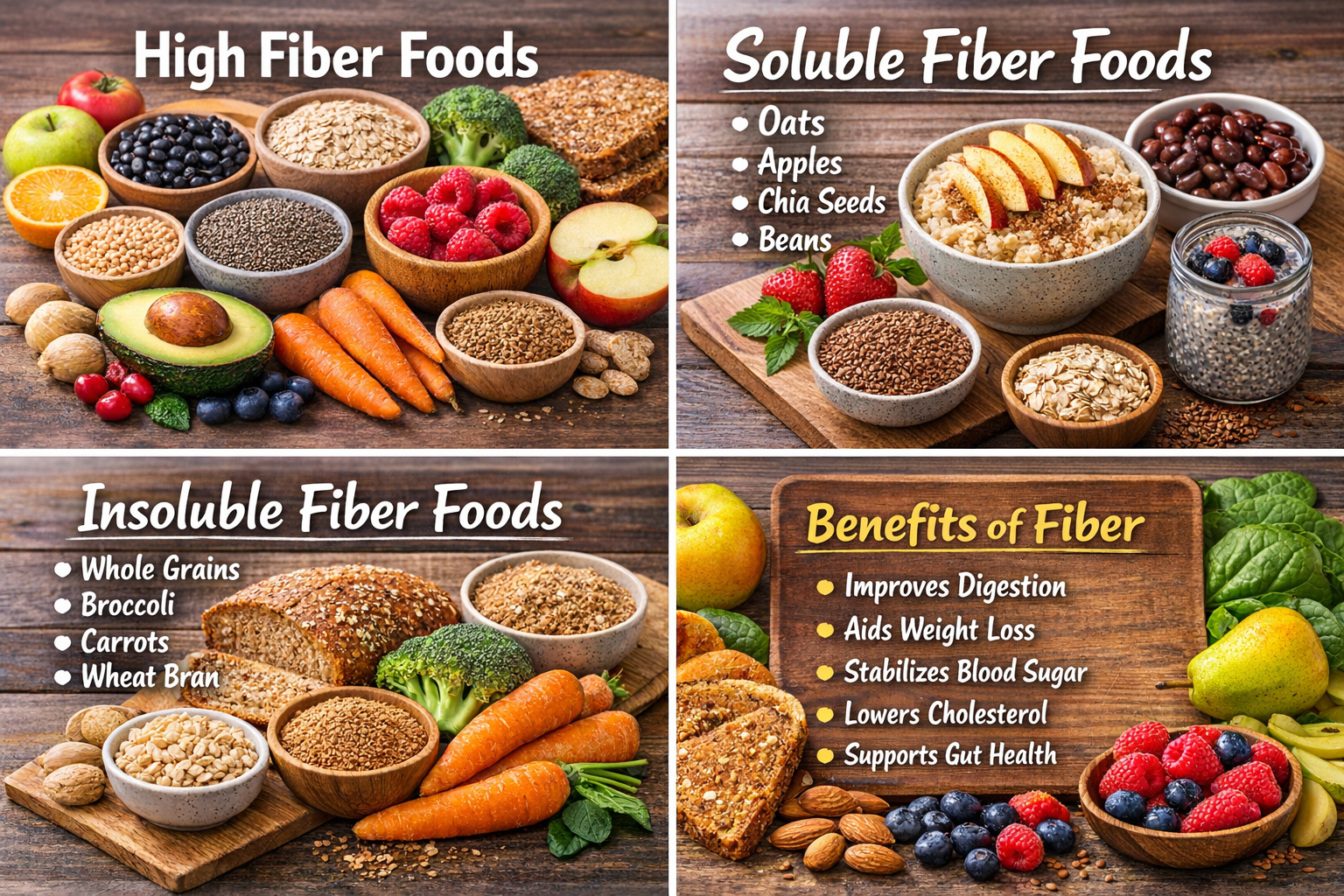
Soluble fiber dissolves in water and forms a **gel-like substance** in your digestive system.
This slows digestion and helps regulate nutrient absorption.
Benefits of soluble fiber
• Helps lower LDL cholesterol
• Stabilizes blood sugar levels
• Improves heart health
• Feeds healthy gut bacteria
• Helps you stay full longer
Foods rich in soluble fiber
* Oats
* Beans
* Lentils
* Apples
* Citrus fruits
* Chia seeds
* Flax seeds
* Barley
Soluble fiber is especially useful for people trying to **lose body fat or control hunger**.
—
2. Insoluble Fiber
Insoluble fiber does **not dissolve in water**. Instead, it adds bulk to stool and helps food move efficiently through the digestive tract.
Benefits of insoluble fiber
• Prevents constipation
• Improves digestion
• Supports gut health
• Helps maintain bowel regularity
Foods rich in insoluble fiber
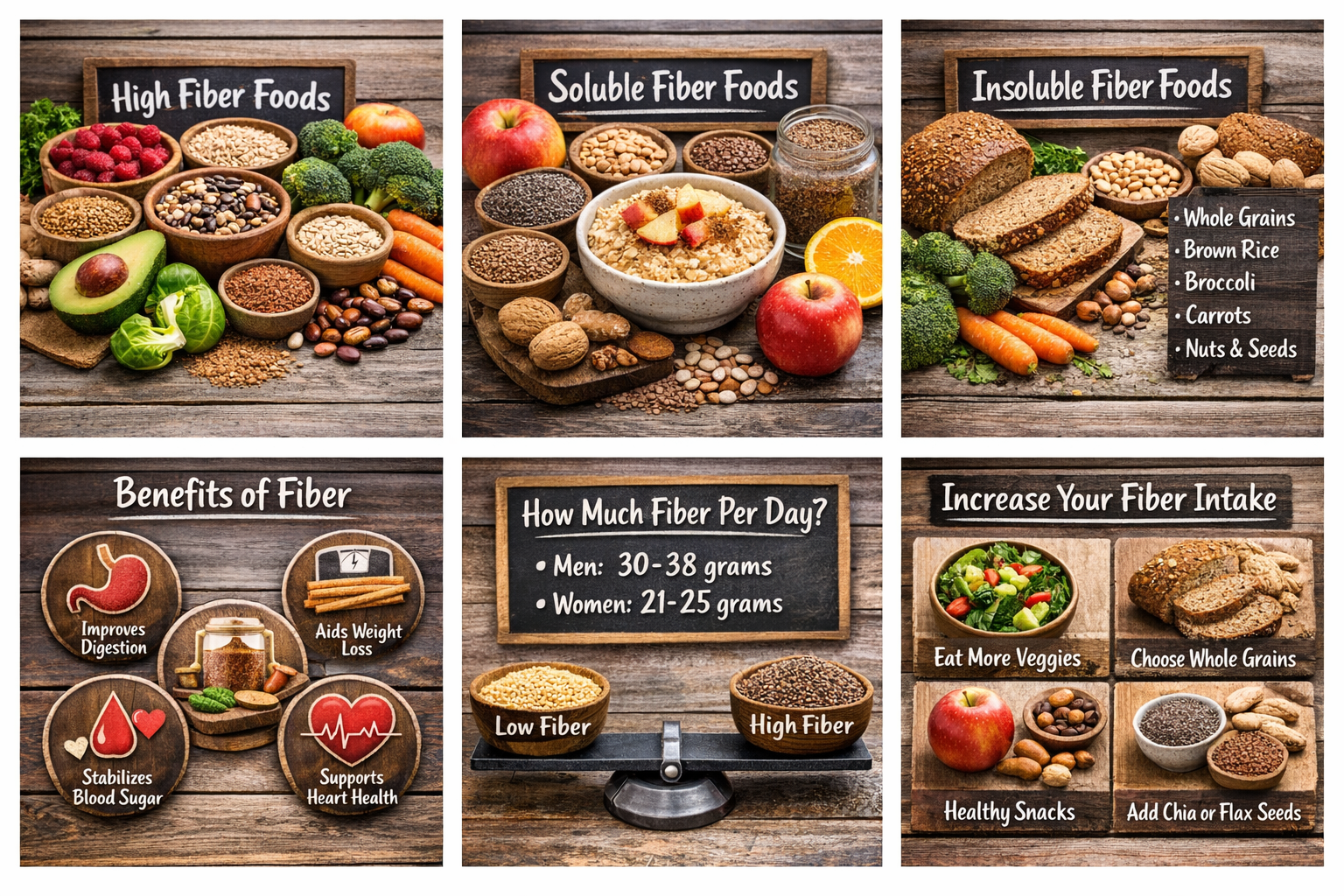
* Whole grains
* Brown rice
* Broccoli
* Carrots
* Leafy greens
* Nuts
* Seeds
* Wheat bran
Think of insoluble fiber as the **clean-up crew for your digestive system**.
—
Why Fiber Matters for Muscle Growth and Fitness
Many people associate fiber with digestion, but it also plays an important role in **fitness performance and body composition**.
1. Fiber Helps Control Body Fat
Fiber slows digestion and keeps you feeling full longer.
That means:
* Less snacking
* Fewer calorie spikes
* Better appetite control
Research consistently shows that people who eat **higher fiber diets naturally consume fewer calories**.
For athletes or anyone trying to get lean, fiber helps make dieting **much easier to sustain**.
—
2. Fiber Improves Gut Health
Your gut contains trillions of bacteria known as the **gut microbiome**.
These bacteria influence:
* metabolism
* inflammation
* nutrient absorption
* immune health
Fiber acts as **fuel for beneficial gut bacteria**, allowing them to produce compounds called **short-chain fatty acids**, which support metabolic health.
A healthier gut microbiome has been linked to:
* improved fat loss
* better digestion
* improved nutrient absorption
—
3. Fiber Stabilizes Blood Sugar
Large spikes in blood sugar can lead to:
* energy crashes
* cravings
* fat storage
Fiber slows the absorption of carbohydrates, helping maintain **stable blood sugar levels** throughout the day.
Stable blood sugar means:
* consistent energy
* fewer cravings
* improved workout performance
—
4. Fiber Supports Heart Health
Athletes and lifters often focus only on physique, but **long-term cardiovascular health matters too**.
Soluble fiber helps reduce LDL cholesterol by binding to cholesterol particles and removing them from the body.
A diet rich in fiber is associated with lower risk of:
* heart disease
* stroke
* metabolic syndrome
—
How Much Fiber Should You Eat?
According to most health organizations:
| Group | Recommended Daily Fiber |
|---|---|
| Men | 30–38 grams |
| Women | 21–25 grams |
However, many fitness experts recommend **25–40 grams per day** depending on calorie intake.
The problem?
The average person only eats **10–15 grams daily**.
That means most people are consuming **less than half** of the fiber their bodies need.
—
The Best High-Fiber Foods
Here are some of the **most fiber-dense foods you can add to your diet**.
Fruits
* Raspberries – 8g per cup
* Pears – 6g per fruit
* Apples – 4g per fruit
* Bananas – 3g per fruit
Vegetables
* Broccoli – 5g per cup
* Brussels sprouts – 4g per cup
* Carrots – 4g per cup
* Sweet potatoes – 4g per potato
Whole Grains
* Oats – 4g per cup
* Quinoa – 5g per cup
* Brown rice – 3g per cup
* Whole wheat bread – 3g per slice
Legumes
* Lentils – 15g per cup
* Black beans – 15g per cup
* Chickpeas – 12g per cup
Seeds and Nuts
* Chia seeds – 10g per ounce
* Flax seeds – 8g per tablespoon
* Almonds – 4g per ounce
These foods provide **fiber along with vitamins, minerals, and antioxidants**, making them far superior to processed foods.
Simple Ways to Increase Fiber Intake
Increasing fiber doesn’t require a complete diet overhaul.
Small changes can make a big difference.
1. Start Your Day With Fiber
Instead of sugary cereal, try:
* oatmeal with berries
* chia pudding
* whole grain toast with avocado
This can give you **8–15 grams of fiber before noon**.
—
2. Add Vegetables to Every Meal
Vegetables are one of the easiest ways to increase fiber.
Examples:
* spinach in omelets
* broccoli with lunch
* roasted vegetables at dinner
—
3. Choose Whole Grains
Swap refined carbs for whole grains:
| Instead of | Try |
| ————- | —————– |
| White bread | Whole grain bread |
| White rice | Brown rice |
| Regular pasta | Whole wheat pasta |
—
4. Snack Smarter
High-fiber snacks include:
* apples with peanut butter
* almonds
* carrots and hummus
* protein smoothies with chia seeds
—
5. Use Fiber Boosters
Adding small ingredients can dramatically increase fiber intake:
* chia seeds
* flax seeds
* psyllium husk
* oat bran
Just one tablespoon can add **5–10 grams of fiber**.
—
Common Fiber Mistakes
Increasing Fiber Too Quickly
If you suddenly jump from **10 grams to 40 grams**, you may experience:
* bloating
* gas
* stomach discomfort
Increase fiber **gradually over 1–2 weeks**.
—
Not Drinking Enough Water
Fiber absorbs water.
Without enough hydration, fiber can cause **constipation instead of preventing it**.
Aim for **at least 2–3 liters of water daily**.
—
Relying on Processed Fiber Foods
Many products claim to be “high fiber” but are still ultra-processed.
Whole foods provide **better nutrients and better gut support**.
—
Fiber and Fat Loss: A Powerful Combination
One of the simplest ways to lose body fat without extreme dieting is to increase fiber intake.
Fiber helps by:
* reducing hunger
* lowering calorie intake
* improving digestion
* stabilizing blood sugar
* supporting gut health
Some researchers even suggest that **fiber intake may be one of the strongest predictors of successful weight loss**.
That’s why many successful nutrition plans naturally include high-fiber foods.
—
Key Takeaways
Fiber is one of the most **underrated nutrients in health and fitness**.
When consumed regularly, it can:
✔ Improve digestion
✔ Support fat loss
✔ Stabilize blood sugar
✔ Improve gut health
✔ Lower cholesterol
✔ Help control hunger
Yet most people consume **less than half the fiber their body needs**.
The good news is that improving your fiber intake is simple:
* Eat more whole foods
* Add vegetables to meals
* Choose whole grains
* Include legumes and seeds
Small daily changes can make a **huge difference in long-term health and performance**.
FAQ: Fiber and Your Diet
What does fiber do for your body?
Fiber supports digestion, regulates blood sugar, lowers cholesterol, and helps control hunger. It also feeds beneficial gut bacteria that support overall health.
What foods are highest in fiber?
Some of the highest fiber foods include lentils, beans, chia seeds, oats, raspberries, pears, broccoli, and whole grains.
How much fiber should you eat per day?
Most adults should consume 25–38 grams of fiber per day, depending on age and gender.
Is fiber good for weight loss?
Yes. Fiber helps control hunger and keeps you feeling full longer, which can naturally reduce calorie intake and support weight loss.
—
Final Thoughts
If you’re serious about improving your health, body composition, and overall performance, **fiber should be a daily priority**.
Instead of chasing complicated diets or expensive supplements, start by focusing on the basics.
Whole foods. Balanced meals. Adequate fiber.
Your body — and your gut — will thank you.
—
What are your favorite high-fiber foods that help you stay full and energized throughout the day?
Let us know in the comments below!
Leave a Reply