
The Best Foods for Muscle Growth
Build more muscle by eating smarter. Learn exactly which proteins, carbs, fats, micronutrients, and hydration habits drive muscle repair, performance, and recovery—plus portion targets, timing tips, and simple food lists.
## Why Your Plate Matters: The Foundation of Muscle Growth
Training creates the **stimulus**; nutrition supplies the **materials**. When you lift, you cause micro-tears in muscle fibers. Recovery rebuilds them stronger—*if* you provide:
* **Protein** → amino acids for **muscle protein synthesis**
* **Carbohydrates** → glycogen to fuel performance and recovery
* **Healthy fats** → hormone support (including testosterone), cell health
* **Micronutrients & water** → the enzymatic “spark plugs” and transport system
Skipping nutrition is like trying to build a skyscraper with toothpicks.
## Protein Powerhouses: Essential for Repair & Synthesis
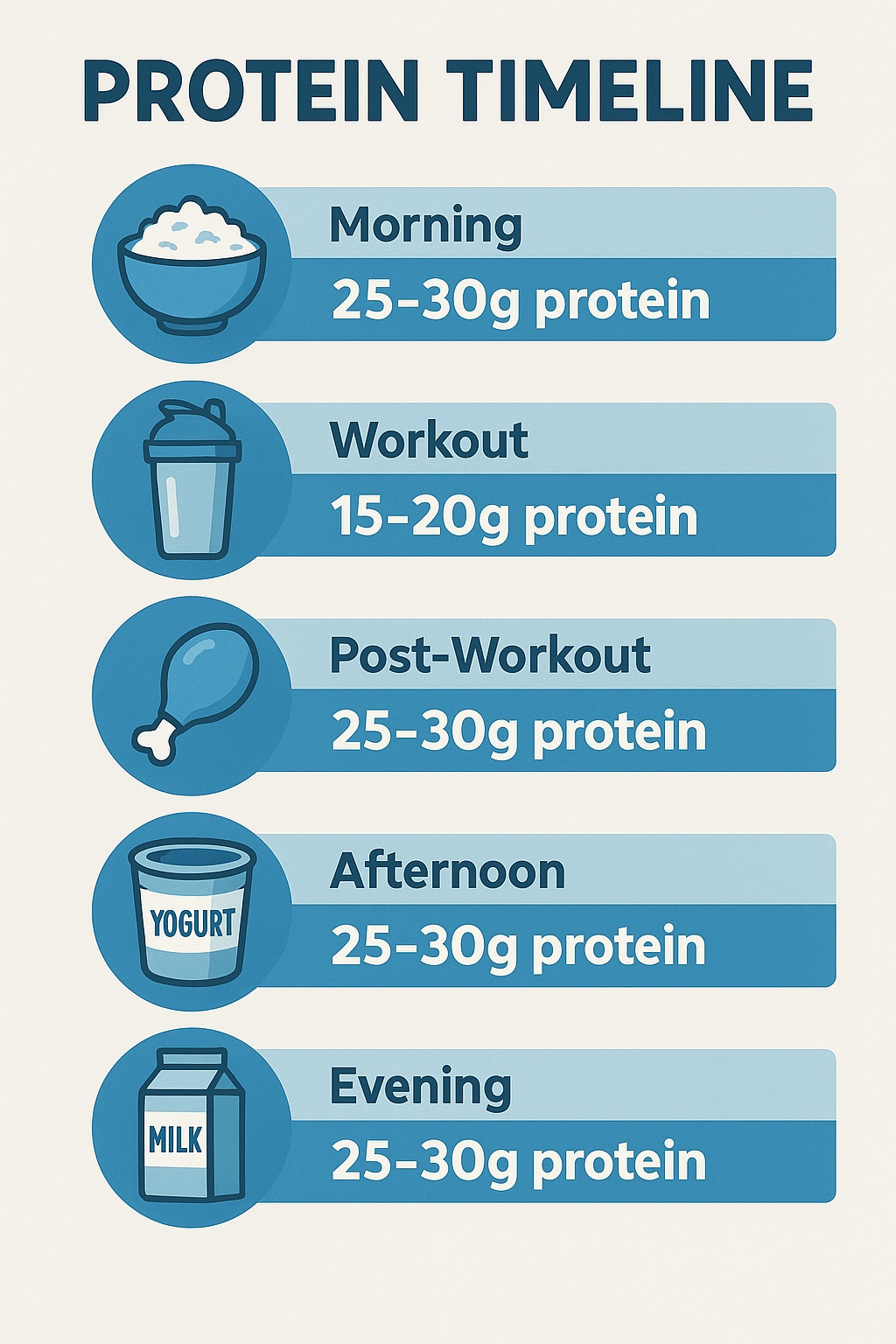
Aim for **1.6–2.2 g protein/kg body weight** (≈0.7–1.0 g/lb) spread across 4–6 feedings.
### Animal-Based (complete amino acid profile)
* **Chicken & Turkey Breast** – Lean, versatile; rich in B-vitamins, selenium, phosphorus.
* **Lean Beef & Pork (sirloin, tenderloin)** – Protein + creatine, iron, zinc, B-vitamins.
* **Eggs** – \~6 g high-quality protein each; yolks add vitamin D, B12, and choline.
* **Salmon, Mackerel, Sardines** – Protein + omega-3s to reduce soreness and support recovery.
* **Greek Yogurt & Cottage Cheese** – Whey (fast) + casein (slow); great pre-bed option.
### Plant-Based
* **Lentils, Chickpeas, Black Beans** – Protein + fiber; pair with grains for complete AA profile.
* **Tofu & Tempeh** – Soy-based *complete* proteins; tempeh adds fiber via fermentation.
* **Quinoa** – Rare *complete* grain; carbs + protein + magnesium/iron.
* **Seitan** – High protein from wheat gluten (skip if gluten-sensitive).
### Protein Powders (convenience, not a crutch)
* **Whey** (fast; ideal post-workout)
* **Casein** (slow; ideal pre-sleep)
* **Pea/Soy/Rice/Hemp** (plant options; many are complete or complementary)
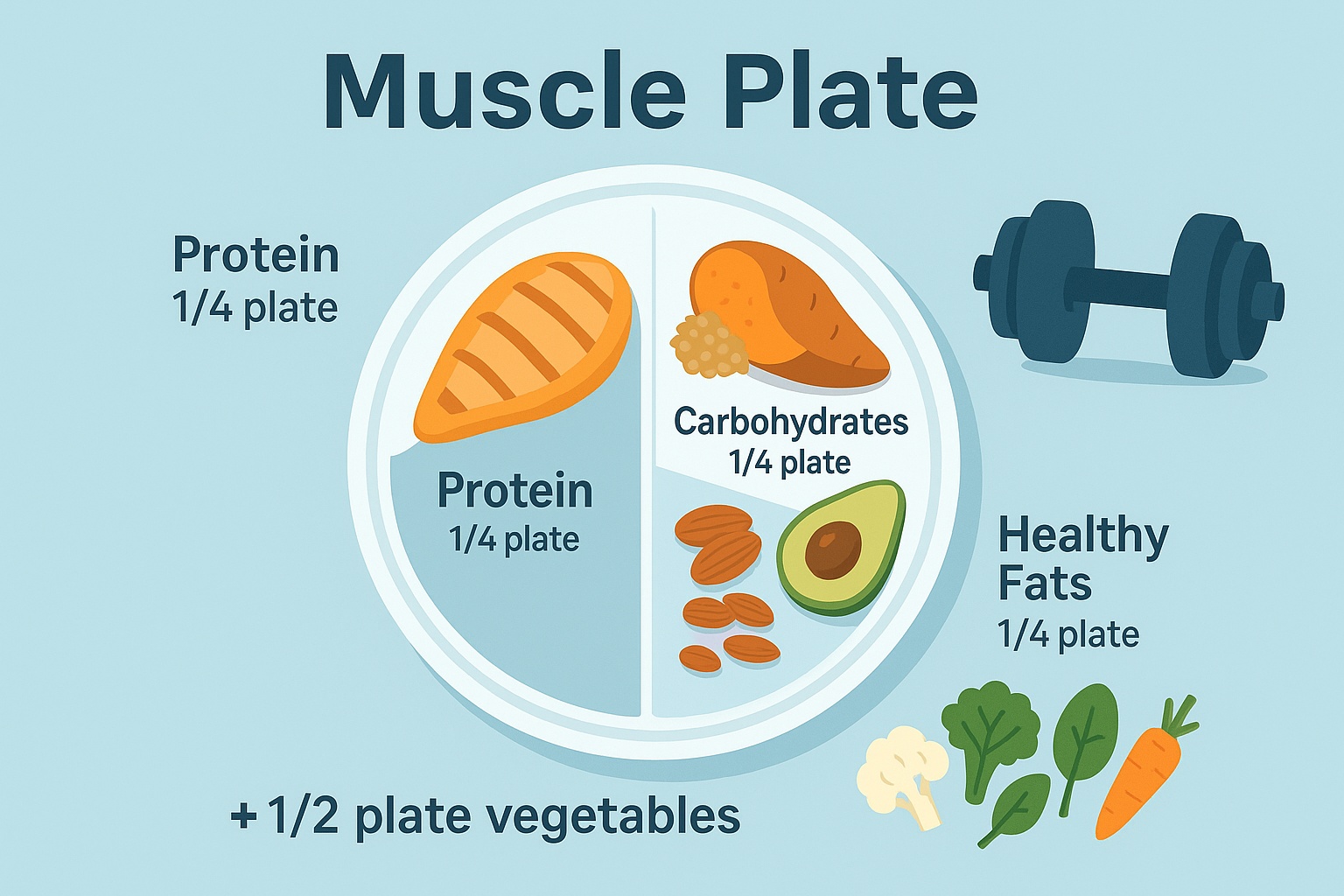
## Complex Carbohydrates: Fuel for Performance & Recovery
Target **3–5 g carbs/kg body weight** (≈1.4–2.3 g/lb); use the higher end on hard training days.
**Why they matter**
* **Refuel glycogen** for heavier lifts and more quality reps
* **Spare muscle** from being broken down for energy
* **Improve recovery** when paired with protein post-workout
* **Support nutrient delivery** via insulin-mediated uptake
**Great sources**
* **Oats** • **Brown Rice & Quinoa** • **Sweet Potatoes**
* **Whole-Wheat Bread/Pasta** • **Beans & Lentils**
* **Starchy Veg (Potatoes, Corn, Peas)**
—
## Healthy Fats: Hormones, Recovery, and Cell Health
Keep fats at **20–30% of daily calories** (≈0.35–0.55 g/lb).
**Benefits**
* **Hormone production** (including testosterone)
* **Absorption of fat-soluble vitamins** A, D, E, K
* **Lower inflammation** (omega-3s) for faster recovery
* **Cell membrane integrity** and long-duration energy
**Top picks**
* **Avocado** • **Almonds/Walnuts** • **Chia/Flax**
* **Extra-Virgin Olive Oil** • **Salmon/Mackerel/Sardines**
* **Whole Eggs** (don’t skip the yolk)
—
## Micronutrients & Hydration: Small Things, Big Impact
### Micronutrients
* **Energy metabolism:** B-vitamins; **ATP support:** magnesium
* **Nerve/muscle function:** potassium, sodium, calcium, magnesium
* **Immunity & collagen:** vitamins C, A, D; zinc, selenium
* **Antioxidant defense:** vitamins C & E, selenium
* **Oxygen transport:** iron
**Eat the rainbow:** berries, leafy greens, crucifers, citrus; whole grains; nuts/seeds; dairy or fortified alternatives; lean meats or legumes.
### Hydration
Even a **1–2%** body-weight water loss impairs strength and focus.
* **Daily:** 2–2.5 L baseline, more with training/heat
* **Check:** pale-yellow urine
* **Train:** sip before/during; include electrolytes on long/hot sessions
—
## Portions, Timing & Balance
### Quick Targets
* **Protein:** 1.6–2.2 g/kg (0.7–1.0 g/lb)
* **Carbs:** 3–5 g/kg (1.4–2.3 g/lb)
* **Fats:** 20–30% of calories (≈0.35–0.55 g/lb)
### Timing that helps
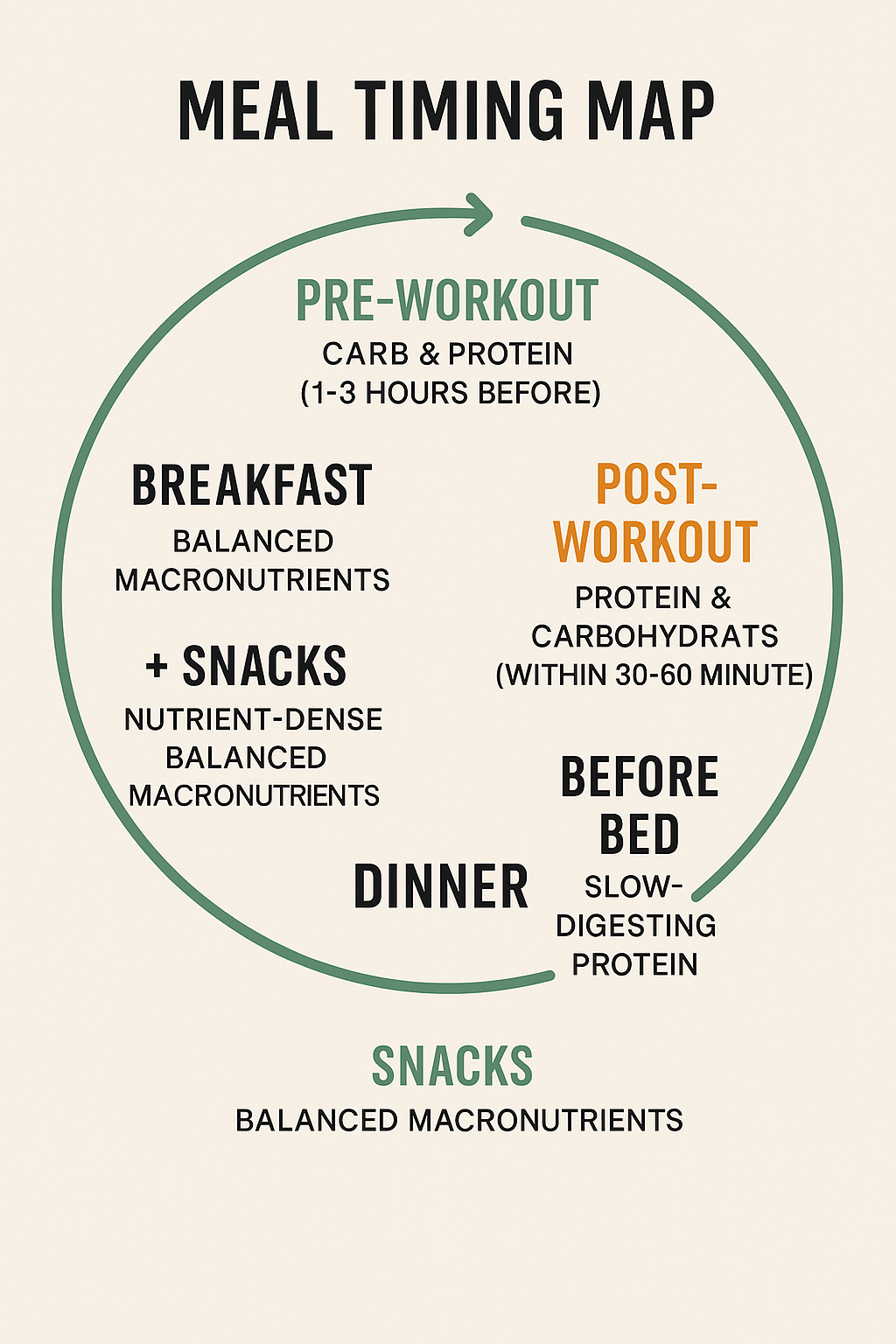
* **Pre-workout (1–3 h):** complex carbs + moderate protein
* **Post-workout (30–60 min):** fast protein + quick carbs
* **Before bed:** slow protein (e.g., casein)
* **Daily pattern:** 4–6 balanced meals/snacks, every 2–4 hours
—
## Simple Food Tables (WordPress-Friendly)
### Top Protein Sources (per typical serving)
| Food | Serving | Notes |
|---|---|---|
| Chicken Breast (cooked) | 4 oz (113 g) | Lean, versatile; high leucine |
| Turkey Breast (cooked) | 4 oz (113 g) | Very lean; B-vitamins |
| Lean Beef (sirloin) | 4 oz (113 g) | Creatine, iron, zinc |
| Salmon | 4 oz (113 g) | Protein + omega-3s |
| Eggs (whole) | 2 eggs | Complete protein; vitamin D, choline |
| Greek Yogurt (plain) | 1 cup (227 g) | Whey + casein; calcium |
| Cottage Cheese | 1 cup (210 g) | Slow-digesting casein |
| Tofu (firm) | 4 oz (113 g) | Soy complete protein |
| Tempeh | 4 oz (113 g) | Fermented; higher fiber |
| Quinoa (cooked) | 1 cup (185 g) | Complete grain; carbs + protein |
### Complex Carbs to Prioritize
| Food | Serving | Best Use |
|---|---|---|
| Oats | 1/2–1 cup dry | Breakfast, pre-training fuel |
| Brown Rice | 1 cup cooked | Lunch/dinner carb base |
| Sweet Potato | 1 medium | Post-workout or dinner |
| Whole-Wheat Pasta | 1 cup cooked | Carb load before heavy days |
| Beans/Lentils | 1 cup cooked | Carb + protein + fiber |
### Healthy Fats (build hormones, reduce inflammation)
| Food | Serving | Why It Helps |
|---|---|---|
| Avocado | 1/2 fruit | Monounsaturated fats; potassium |
| Almonds/Walnuts | 1 oz (28 g) | Vitamin E; ALA omega-3 (walnuts) |
| Chia/Flax Seeds | 1–2 tbsp | Fiber + ALA omega-3 |
| Extra-Virgin Olive Oil | 1 tbsp | Polyphenols; heart-healthy |
| Salmon/Sardines | 4 oz (113 g) | EPA/DHA omega-3s |
—
## Beyond the Kitchen: Training, Sleep, Consistency
* **Training stimulus:** progressive overload, compound lifts, good form, sufficient volume
* **Sleep:** **7–9 hours**—supports growth hormone, testosterone, recovery
* **Consistency:** show up, track progress, adjust patiently
## Quick Comparison
| Feature | Standard American Diet | Optimized Muscle-Building Diet |
|---|---|---|
| Protein | Often low/erratic | 1.6–2.2 g/kg, distributed |
| Carbs | Refined, low fiber | Complex carbs, timed around training |
| Fats | High saturated/trans | 20–30% cals; focus on unsaturated/omega-3 |
| Structure | Irregular meals | 4–6 balanced feedings/day |
| Outcome | Weight gain/low energy | Better performance, recovery, lean mass |
## Key Takeaways (Bookmark This)
* **Protein is paramount:** 1.6–2.2 g/kg daily from diverse sources
* **Carbs are fuel:** 3–5 g/kg; emphasize complex carbs, especially pre/post-workout
* **Fats matter:** 20–30% calories for hormones and recovery
* **Micros & water:** eat colorfully, hydrate to pale-yellow urine
* **Timing helps:** pre = carbs+protein; post = fast protein + quick carbs; pre-sleep casein
* **Train, sleep, repeat:** progressive overload + **7–9 h** sleep + consistency
—
## Optional: FAQ (paste as blocks or keep as content)
**Q: Can I build muscle on a plant-based diet?**
Yes—hit total protein targets using tofu/tempeh, legumes + grains, and/or a plant protein blend.
**Q: Do I need protein immediately after training?**
You don’t need to *rush*, but **30–60 minutes** post-workout is a practical window to take in protein + carbs.
**Q: Should I avoid carbs at night?**
No—carbs at dinner can refill glycogen and may aid sleep; total daily intake and performance matter most.
—
❓ Frequently Asked Questions
1. What’s the difference between a plateau and a setback?
A plateau is when your progress (like strength gains or weight loss) stalls despite your consistent efforts. It’s a normal sign that your body has adapted to your routine and needs a new challenge.
A setback is a temporary interruption that forces you to stop or reduce your activity. This is usually caused by external factors like an illness, an injury, a busy work schedule, or a family emergency.
2. The scale isn’t moving. Does this mean I’m not making progress?
Not at all! The scale is only one metric and it can be misleading. You are likely making Non-Scale Victories (NSVs), which are often more important. Look for other signs of progress, such as:
- Your clothes fit better or feel looser.
- You feel more energetic throughout the day.
- You are sleeping more soundly.
- You can lift heavier weights or do more reps than before.
- Activities like climbing stairs feel easier.
- Your mood and mental clarity have improved.
3. I lost all my motivation. How do I get it back?
Motivation naturally ebbs and flows. Don’t rely on it; rely on consistency. When you feel unmotivated, try these steps:
- Reconnect with your ‘Why’: Remind yourself of the deep, personal reason you started. Is it to have more energy for your family? To manage stress? To feel confident? Write it down and put it somewhere visible.
- Focus on small steps: Forget the hour-long workout. Commit to a “Minimum Viable Effort” (MVE), like a 10-minute walk or 5 minutes of stretching. Small wins build momentum.
- Change your routine: Boredom is a motivation killer. Try a new exercise, a different workout class, or even just a new playlist.
4. I got sick and missed a whole week. How do I get back on track?
First, release any guilt. Getting sick is a normal part of life, and prioritizing rest is the right choice. When you return, do not try to pick up exactly where you left off. This is a common mistake that leads to re-injury or burnout.
Instead, embrace a gradual return. Start with about 50-70% of your previous intensity or volume. See how your body feels, and slowly increase your effort over the next one or two weeks. Listening to your body is more important than sticking to a rigid plan.
5. What if my goals just feel too overwhelming now?
If your goals feel overwhelming, they might not be serving you anymore. It is perfectly okay—and smart—to re-evaluate your goals.
- Assess your current life: Is your original goal realistic with your new work schedule or stress levels?
- Break it down: Instead of a big outcome goal (like “lose 20 pounds”), focus on small, controllable process goals (like “walk for 20 minutes 3 times this week” or “add a vegetable to my lunch”).
- Shift your ‘Why’: Your motivation may have changed. Maybe your goal is no longer about aesthetics but about feeling good and managing stress. Adjust your goals to match your new ‘why’.
Leave a Reply