
The Importance of Cooling Down After a Workout


Introduction: The Most Overlooked Step in Fitness
Many people spend hours planning their workouts. They carefully choose exercises, count reps, track calories, and push themselves to the limit in the gym.
But the moment the workout ends?
They grab their water bottle, check their phone, and walk straight out of the gym.
No cooldown. No stretching. No recovery.
Skipping the cooldown phase is one of the most common mistakes in fitness—and it can lead to unnecessary soreness, reduced flexibility, slower recovery, and even injury.
If you’re serious about building muscle, improving endurance, or maintaining long-term health, understanding the importance of cooling down after a workout is essential.
In this guide, you’ll learn:
- What a cooldown actually does for your body
- The science behind post-workout recovery
- How cooling down prevents injury
- The best cooldown exercises for recovery
- How long your cooldown should be
By the end of this article, you’ll understand why a proper cooldown may be just as important as the workout itself.
What Is a Cooldown After a Workout?
A cooldown is a short period of light activity and stretching performed after exercise to help your body gradually return to its resting state.
Instead of stopping abruptly after intense activity, a cooldown allows your body to slowly adjust.
A proper cooldown usually includes:
• Light cardio (walking or slow cycling)
• Stretching major muscle groups
• Controlled breathing
• Mobility exercises
This process helps regulate:
- Heart rate
- Blood circulation
- Muscle tension
- Oxygen delivery
Without a cooldown, your body may experience sudden changes in circulation and muscle tightness, which can increase discomfort and slow recovery.
Why Cooling Down Is Important After Exercise
1. Helps Your Heart Rate Return to Normal


During intense exercise, your heart rate increases to pump oxygen-rich blood to your muscles.
If you stop suddenly:
- blood can pool in your legs
- dizziness may occur
- blood pressure can drop quickly
Cooling down allows your cardiovascular system to gradually return to normal, reducing stress on the heart.
Even just 5 minutes of light movement can help stabilize circulation.
2. Reduces Muscle Stiffness and Soreness
After a workout, your muscles contain metabolic byproducts such as lactic acid and other waste compounds.
A cooldown helps:
- increase circulation
- flush waste products
- deliver nutrients to muscles
This can reduce delayed onset muscle soreness (DOMS) and help muscles recover faster.
While soreness is normal after intense workouts, proper recovery practices—like cooling down—can minimize excessive stiffness.
3. Improves Flexibility and Mobility
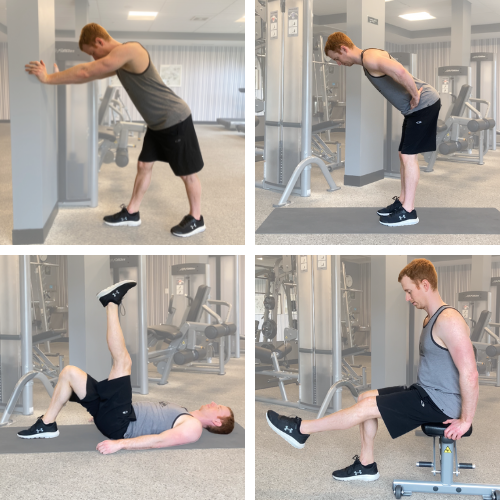
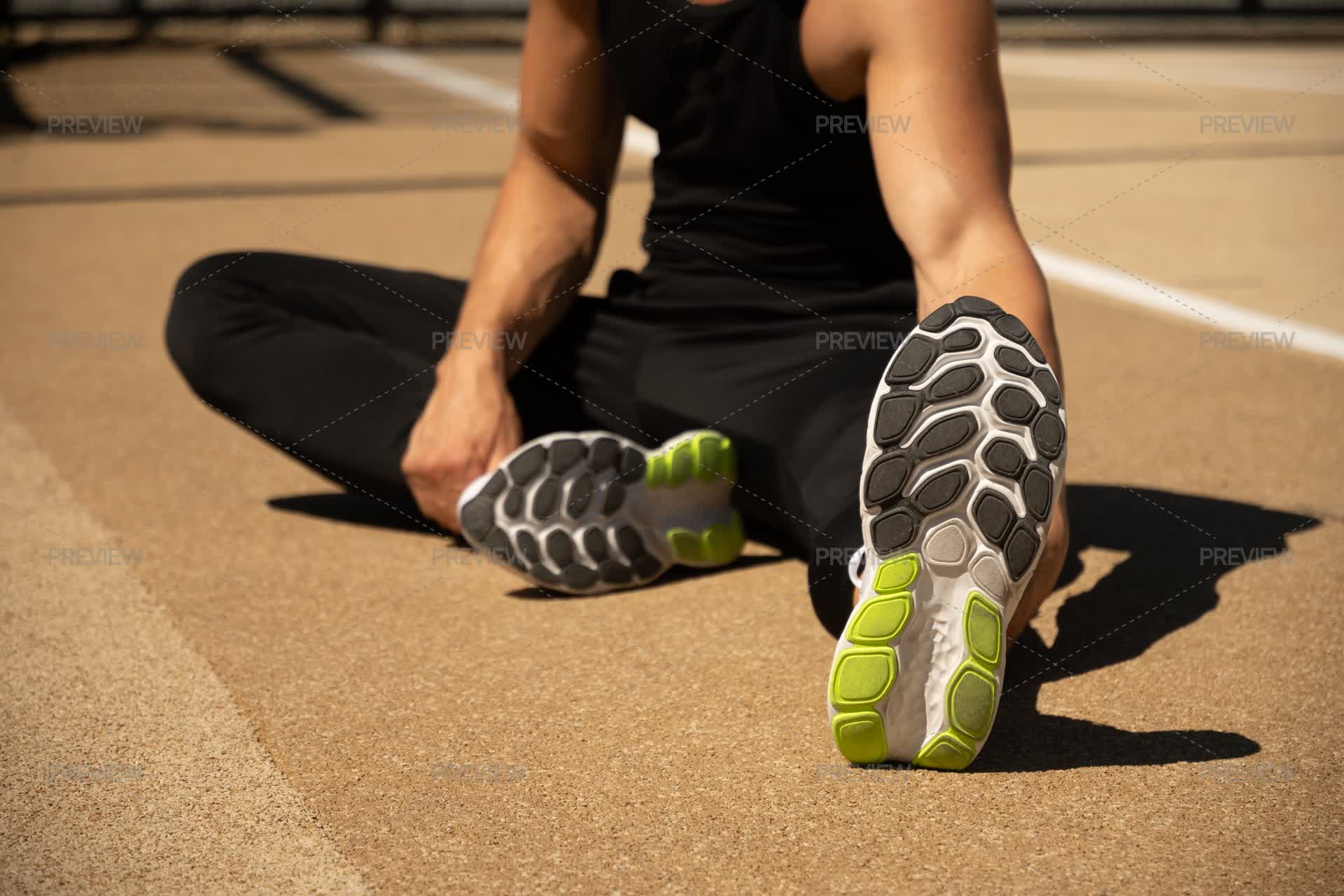


Your muscles are warm and more flexible immediately after exercise.
This makes the cooldown phase the perfect time for stretching.
Regular post-workout stretching can help:
- improve flexibility
- increase joint mobility
- reduce muscle tightness
- enhance athletic performance
Over time, better mobility can also help improve exercise form and reduce injury risk.
4. Prevents Injury
Many injuries occur when muscles become tight, fatigued, or overworked.
Cooling down helps your body transition safely from high-intensity exercise to rest.
This process helps prevent:
- muscle strains
- ligament stress
- joint stiffness
- overtraining fatigue
Athletes and trainers consistently emphasize cooldown routines because they help keep the body balanced and injury-resistant.
5. Supports Faster Recovery
Recovery is where real muscle growth happens.
When you train, you create microscopic tears in muscle fibers. During recovery, the body repairs those fibers, making them stronger.
Cooling down supports this process by:
- improving blood flow
- delivering nutrients to muscles
- reducing muscle tension
- promoting relaxation
A proper cooldown can help your body transition from training mode to recovery mode.
The Science Behind Cooling Down
Scientific research has shown that active recovery can improve post-exercise circulation.
According to research published in The Journal of Strength and Conditioning Research, light activity after exercise can enhance blood flow and reduce muscle fatigue.
Other studies suggest that cooling down may help regulate:
- oxygen levels
- metabolic waste removal
- muscle elasticity
While a cooldown won’t eliminate soreness entirely, it can significantly improve overall recovery quality.
How Long Should a Cooldown Be?
A typical cooldown should last 5 to 10 minutes.
This gives your body enough time to gradually transition back to resting levels.
General guideline
| Workout Type | Recommended Cooldown |
|---|---|
| Strength training | 5–10 minutes |
| Cardio workouts | 5–10 minutes |
| High intensity training | 10 minutes |
The more intense the workout, the more beneficial a longer cooldown may be.
The Best Cooldown Exercises
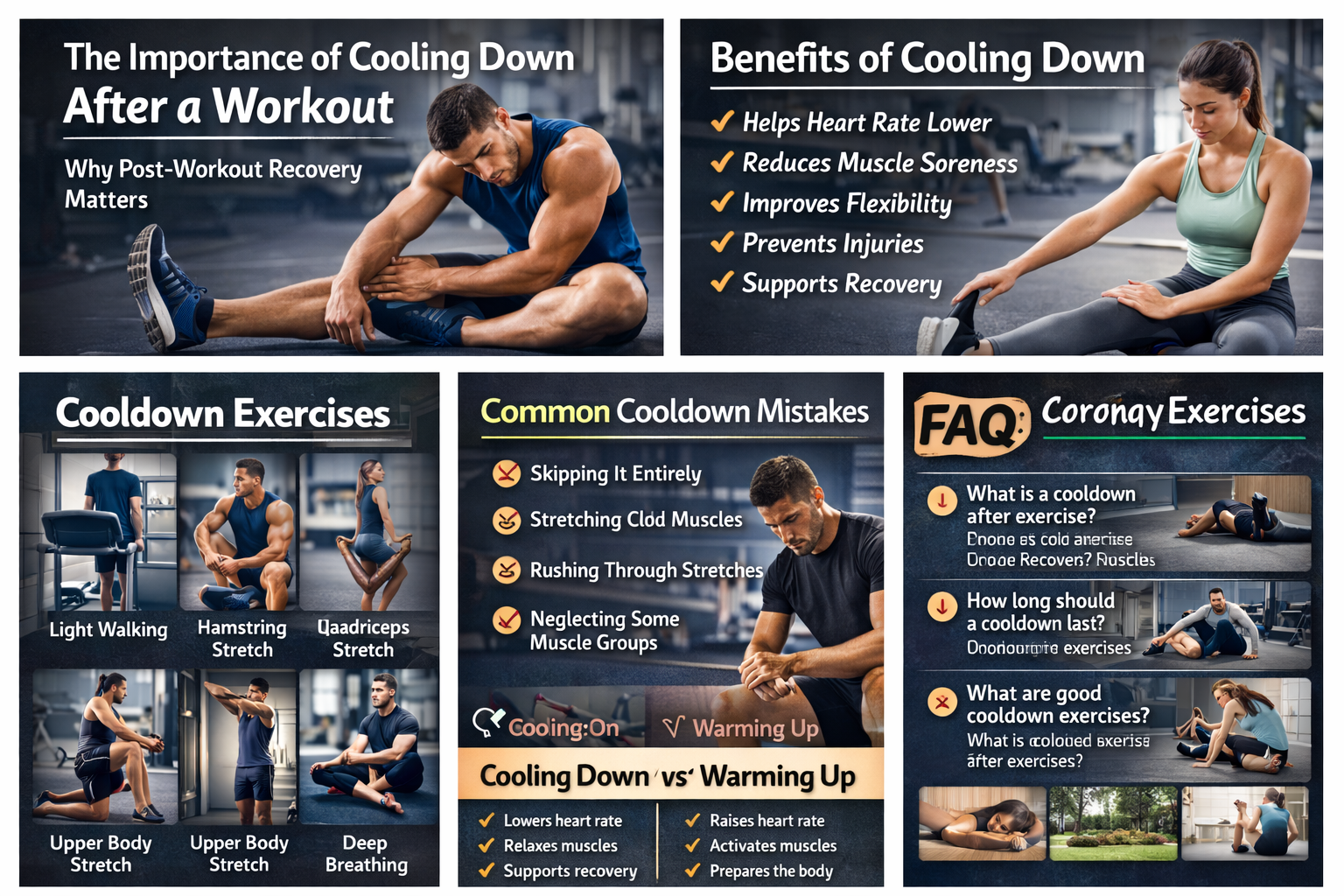
1. Light Walking
The easiest cooldown activity is simply walking slowly for several minutes.
This allows your heart rate and breathing to stabilize.
Examples:
- walk around the gym
- slow treadmill walk
- light jog transitioning to walking
2. Hamstring Stretch
This stretch targets the muscles at the back of your legs.
Benefits:
- reduces lower body tightness
- improves flexibility
- supports recovery from running or leg workouts
Hold each stretch for 20–30 seconds.
3. Quadriceps Stretch
The quadriceps are heavily used during squats, lunges, and running.
Stretching them helps prevent tightness and improve mobility.
4. Shoulder and Upper Body Stretch
After upper body workouts, focus on:
- shoulders
- chest
- triceps
- upper back
This helps relieve tension created by pressing and pulling exercises.
5. Deep Breathing Exercises
Cooling down is also a great time to practice controlled breathing.
Deep breathing helps:
- reduce stress
- lower heart rate
- activate the body’s recovery system
Try slow breathing patterns:
Inhale for 4 seconds
Exhale for 6 seconds
This activates the parasympathetic nervous system, which promotes relaxation.
Common Cooldown Mistakes
Even when people attempt a cooldown, they often make mistakes.
Skipping it entirely
The most common mistake is not cooling down at all.
Even 5 minutes can make a difference.
Stretching cold muscles
Stretching is most effective after exercise, not before.
Warm muscles respond better to stretching and reduce injury risk.
Rushing through stretches
Many people hold stretches for only a few seconds.
For best results:
Hold stretches 20–30 seconds.
Only stretching one muscle group
A balanced cooldown should address multiple muscle groups.
Focus on:
- legs
- hips
- back
- shoulders
Cooling Down vs Warming Up
Many people confuse warmups and cooldowns, but they serve different purposes.
| Warmup | Cooldown |
|---|---|
| Prepares the body for exercise | Helps the body recover |
| Raises heart rate | Lowers heart rate |
| Activates muscles | Relaxes muscles |
| Prevents injury before exercise | Supports recovery after exercise |
Both are essential parts of a complete workout routine.
Benefits of Cooling Down for Athletes
For athletes and serious lifters, cooldown routines can improve:
- long-term performance
- mobility
- recovery speed
- injury prevention
Professional athletes rarely skip cooldowns because they understand that recovery determines performance longevity.
Consistent cooldown routines can help athletes train harder, more frequently, and with fewer injuries.
Key Takeaways
Cooling down after exercise is one of the most important yet overlooked steps in fitness.
A proper cooldown helps:
✔ Gradually lower heart rate
✔ Reduce muscle soreness
✔ Improve flexibility
✔ Prevent injuries
✔ Support faster recovery
Even a short 5–10 minute cooldown routine can significantly improve how your body feels after training.
Final Thoughts
If you’re serious about improving your fitness, strength, and overall health, don’t let the end of your workout be the weakest part of your routine.
Cooling down is not just an optional step—it’s an essential part of long-term performance and injury prevention.
By adding a simple cooldown routine to your workouts, you can recover faster, feel better, and continue making progress toward your fitness goals.
Your body works hard during exercise.
Give it the recovery it deserves.
Do you currently include a cooldown routine after your workouts, or do you usually skip it?
Share your experience in the comments!
- 3,000-Calorie Bulking Meal Plan for Muscle Growth
- How to Track Macros for Muscle Growth: Beginner’s Guide
- Best Leg Workout for Muscle Growth: Complete Lower-Body Program
- How Much Water Should You Drink to Build Muscle?
- How to Build a Mind-Muscle Connection for Better Muscle Growth
- 50 High-Protein Foods for Muscle Growth Ranked by Protein per Calorie
- Best 5-Day Workout Split for Muscle Growth
- How to Build Muscle at Home With No Equipment
- Best Shoulder Workout for Mass: Build Bigger, Wider Shoulders
- What Is a Deload Week? Benefits, Timing and How to Do One Properly
Leave a Reply